

You have a client who shows up on time, follows every recommendation, never floods in session, and still isn’t getting better. Their presenting concern might be chronic depression, a restrictive eating disorder, or persistent anxiety. On paper, they look like a good therapy candidate. In practice, something keeps not landing.
Radically Open DBT was developed for exactly that client.
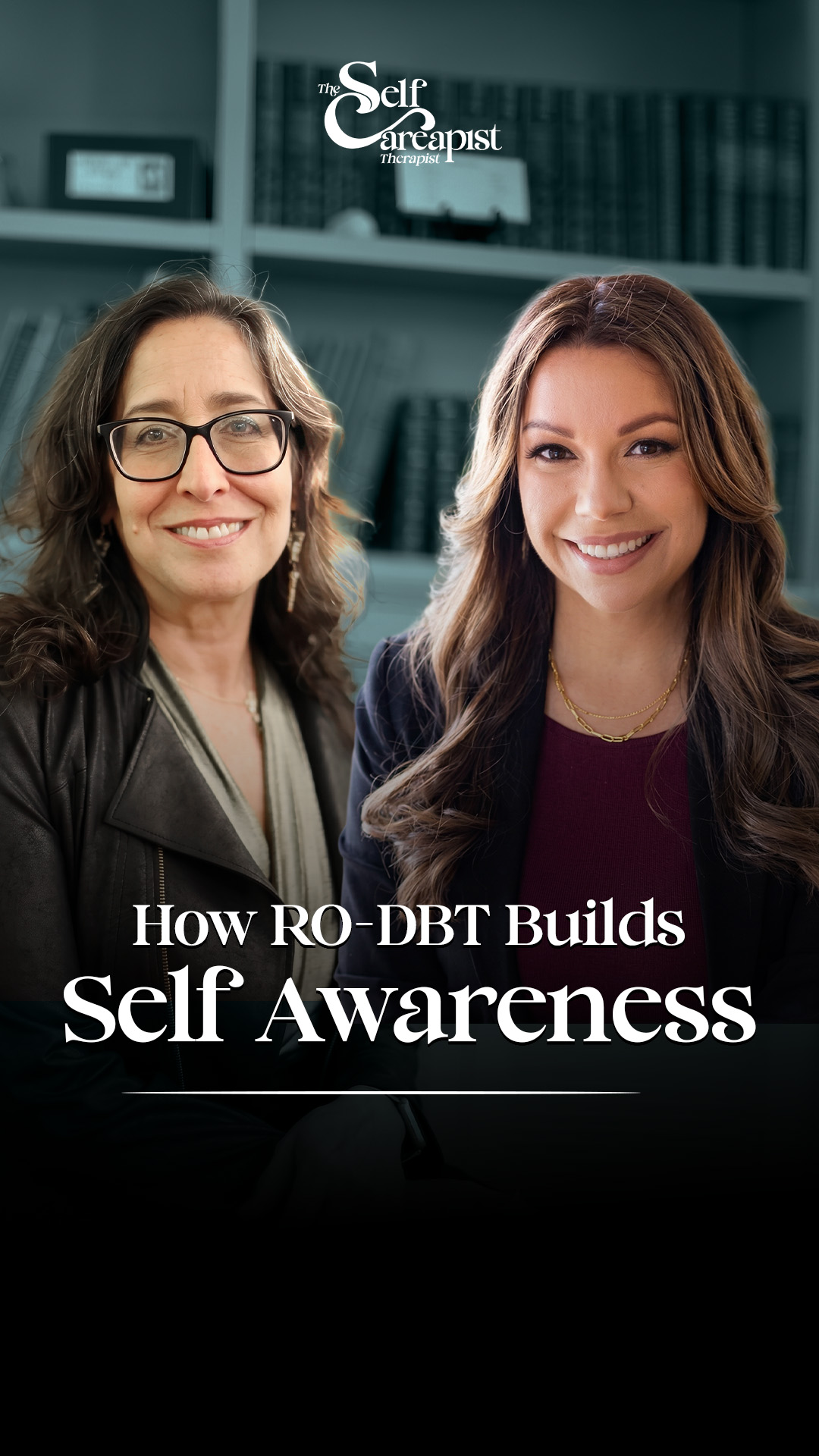
In Episode 35 of Self Careapist Therapist, I sat down with Dr. Ellen Astrachan-Fletcher, Senior Clinician in RO-DBT, lecturer at Northwestern University’s Feinberg School of Medicine, and Associate Professor of Psychiatry at UIC. She brings over 30 years of clinical and teaching experience to both DBT and RO-DBT, and she is among the most knowledgeable clinicians in the country on this treatment approach. This post pulls the key clinical concepts from that conversation.
What Is Radically Open DBT (RO-DBT)
Dr. Thomas Lynch developed Radically Open DBT after observing that a significant subset of clients were not responding to standard DBT. He had trained closely with Marsha Linehan and understood the model well. Even so, he kept encountering clients for whom the core DBT interventions (learning to contain, regulate, and tolerate distress) were not only unhelpful. For these clients, those interventions were simply wrong for the problem.
Standard DBT targets emotional dysregulation: the pattern of showing intense emotion across contexts and struggling to manage it. RO-DBT, by contrast, targets the opposite: emotional overcontrol.
Importantly, emotional overcontrol is not the same as being a controlling person. It describes someone who controls their emotions, holding internal experience tightly while presenting a contained exterior to the world.
Who Is RO-DBT Designed For?
RO-DBT is transdiagnostic, meaning it targets what underlies several diagnostic presentations rather than the diagnosis itself. In practice, research and clinical application have found it well-suited for:
Chronic, treatment-resistant depression. Depression was actually the first condition studied with this model, in a geriatric population. Treatment that had not responded to medication or traditional therapy was often rooted in deep emotional loneliness.
Restrictive eating disorders. Dr. Astrachan-Fletcher co-authored a clinical workbook specifically on RO-DBT for eating disorders, and her forthcoming book addresses RO-DBT for anxiety (August 2026).
OCD and OCPD. Obsessive-compulsive personality disorder in particular skews heavily toward emotional overcontrol.
Personality disorder presentations. Notably, Dr. Astrachan-Fletcher pointed out that the majority of personality disorders cluster on the overcontrolled rather than undercontrolled end.
Chronic anxiety that has not responded to CBT or standard treatment approaches.
Overall, clients who appear to be doing well but report persistent emptiness, difficulty feeling close to others, or a sense of not quite belonging in their own life may be worth exploring through an overcontrol lens.
The Core Problem RO-DBT Addresses: Emotional Loneliness
Tom Lynch uses the term emotional loneliness to describe feeling completely alone in a room full of people who love you.
The internal logic driving this experience goes something like: if they really knew me, if they knew what I actually thought and felt, they would not love me and they would not stay. As a result, the overcontrolled person holds back. Real experience stays concealed, even from people who are genuinely safe. The surface presentation is fine. The stated answer is fine. Then, privately, that same person goes home and cries alone in the bathroom because no one knew they needed anything.
This is not depression in the traditional cognitive-behavioral sense. Rather than a distorted thought pattern that needs challenging, the problem is a learned, reinforced behavioral pattern of emotional concealment that cuts a person off from the very relationships that could help.
What Is Emotional Leakage?
Overcontrolled clients do express emotion, but it surfaces differently than you might expect. RO-DBT uses the term emotional leakage for the moments when controlled emotion comes out in unexpected or indirect ways.
Dr. Astrachan-Fletcher offered a particularly useful example: an overcontrolled person on a bus holds a firm belief that young people should give up their seats for elderly riders. An elderly person boards. A teenager does not move. Having been containing everything for days, the overcontrolled person walks over and confronts the teenager directly. The outburst feels completely justified because it involves right and wrong, not personal feelings.
That is emotional leakage through moral certitude. The content concerns a rule violation. The energy behind it, however, belongs somewhere else entirely.
Recognizing this pattern therefore shifts how a clinician responds to clients who erupt occasionally but remain extremely controlled otherwise. The eruption is not the problem. It is a signal about what someone has been holding.
The Three Treatment Targets in RO-DBT
Rather than building emotional regulation skills the way standard DBT does, RO-DBT develops three distinct capacities:
Flexibility is the ability to respond differently across different situations and contexts, rather than applying a fixed, rule-governed approach to every interaction.
Receptivity and openness addresses the ability to take in feedback. Overcontrolled clients often struggle here, not because they are arrogant, but because receiving feedback feels threatening when someone already believes they are never good enough.
True connection requires careful definition. Dr. Astrachan-Fletcher was explicit on this point: true connection is not a large network or many acquaintances. Instead, it is the felt experience of being fully known by someone and loved anyway. Toward that end, RO-DBT teaches clients to practice vulnerability and authentic self-disclosure, the very behaviors that feel most dangerous to someone with overcontrolled coping.
The Three Mind States in RO-DBT
RO-DBT introduces three mind states that both clinicians and clients work with throughout treatment.
Fixed mind shows up as certainty, rigidity, and resistance to input. Someone in fixed mind believes they already have the answers and do not need feedback.
Fatalistic mind, by contrast, shows up as hopelessness, disengagement, and resigned withdrawal. Here, the belief is that there are no answers and nothing can change.
Flexible mind is what treatment works toward. It is the capacity to ask: given this feedback, or given my reaction, is there something for me to learn here? In essence, flexible mind is openness without capitulation, willingness without self-abandonment.
Where Does Overcontrol Come From?
Temperament is genetic. Dr. Astrachan-Fletcher explained that overcontrolled coping tends to develop from a combination of biological factors, particularly high threat sensitivity and high detail focus, shaped by early life experience.
The highly threat-sensitive, detail-focused child already notices danger and errors everywhere. When that child’s early environment sends repeated messages, whether explicit or implicit, that containing emotion is safer than expressing it, the pattern gets reinforced. Over time, it becomes a deeply grooved way of moving through the world.
By adulthood, these clients have often received praise for exactly the traits that are isolating them. They are reliable, thorough, hardworking, and responsible. Consequently, the overcontrol does not feel like a problem from the inside. It feels like identity.
How RO-DBT Treatment Is Structured
Like standard DBT, RO-DBT pairs individual therapy with a skills component. That skills component is deliberately called a class rather than a group, and the distinction matters clinically.
Overcontrolled clients tend to engage much more comfortably in a classroom setting (a table, paper, pens, and a clear educational frame) than in a process group where emotional sharing is expected. The class format signals that participants are there to learn, not to perform vulnerability in front of strangers. For many overcontrolled clients, that reframe makes the difference between engaging with treatment and finding a reason to avoid it.
How to Train in RO-DBT
Dr. Astrachan-Fletcher recommends starting at radicallyopendbt.net, the official site for all sanctioned RO-DBT training.
The pathway moves through three levels. Level 1 offers an introductory overview, useful for orientation but not sufficient for practicing as an RO-DBT therapist. Level 2 is a full online training taught directly by Tom Lynch, covering all theory and skills in depth. After completing Level 2, Level 3 is an in-person intensive where clinicians practice the nuances of the treatment with colleagues. Beyond Level 3, clinicians can pursue RO-DBT Scholar and Senior Clinician designations.
Dr. Astrachan-Fletcher holds the Senior Clinician designation and offers organizational trainings for groups and treatment programs. Her practice, EAF ReCenter, can be reached at eaf-recenter.com.
Clinical Takeaways
When a client has tried multiple treatments and continues to report emptiness or relational disconnection, overcontrol may be the organizing mechanism rather than the presenting diagnosis.
Furthermore, emotional loneliness is a specific and treatable clinical target. The intervention is not more socialization. Rather, it is helping the client learn to show up in the connections they already have.
It is also worth noting that the skills in RO-DBT are not similar to DBT skills. They address different underlying problems and require separate training. Familiarity with DBT, in other words, does not translate to competence in RO-DBT.
Finally, the classroom format of the skills component is a clinical decision, not an administrative convenience. It was designed specifically with the overcontrolled client’s experience in mind.
Listen to the Full Episode
This post covers the core framework. The conversation with Dr. Astrachan-Fletcher goes much deeper, including specific skill examples, the clinical presentation differences between overcontrolled and undercontrolled clients, and a candid discussion of how self-report assessments can fail with this population.
You can listen to Episode 35 on all major podcast platforms or watch the full conversation on YouTube at @selfcareapist.
You have a client who shows up on time, follows every recommendation, never floods in session, and still isn’t getting better. Their presenting concern might be chronic depression, a restrictive eating disorder, or persistent anxiety. On paper, they look like a good therapy candidate. In practice, something keeps not landing.
Radically Open DBT was developed for exactly that client.
In Episode 35 of Self Careapist Therapist, I sat down with Dr. Ellen Astrachan-Fletcher, Senior Clinician in RO-DBT, lecturer at Northwestern University’s Feinberg School of Medicine, and Associate Professor of Psychiatry at UIC. She brings over 30 years of clinical and teaching experience to both DBT and RO-DBT, and she is among the most knowledgeable clinicians in the country on this treatment approach. This post pulls the key clinical concepts from that conversation.
What Is Radically Open DBT (RO-DBT)?
Dr. Thomas Lynch developed Radically Open DBT after observing that a significant subset of clients were not responding to standard DBT. He had trained closely with Marsha Linehan and understood the model well. He kept encountering clients for whom the core DBT interventions (learning to contain, regulate, and tolerate distress) were not only unhelpful. They were wrong for the problem.
Standard DBT targets emotional dysregulation: the pattern of showing intense emotion across contexts and struggling to manage it. RO-DBT targets the opposite: emotional overcontrol.
Emotional overcontrol is not the same as being a controlling person. It describes a person who controls their emotions, holding internal experience tightly while presenting a contained exterior to the world.
Who Is RO-DBT Designed For?
RO-DBT is transdiagnostic, meaning it targets what underlies several diagnostic presentations rather than the diagnosis itself. Research and clinical application have found it well-suited for:
Chronic, treatment-resistant depression. Depression was the first condition studied with this model, in a geriatric population. Treatment that had not responded to medication or traditional therapy was often rooted in deep emotional loneliness.
Restrictive eating disorders. Dr. Astrachan-Fletcher co-authored a clinical workbook specifically on RO-DBT for eating disorders, and her forthcoming book addresses RO-DBT for anxiety (August 2026).
OCD and OCPD. Obsessive-compulsive personality disorder skews heavily toward emotional overcontrol.
Personality disorder presentations. Dr. Astrachan-Fletcher noted that the majority of personality disorders cluster on the overcontrolled rather than undercontrolled end.
Chronic anxiety that has not responded to CBT or standard treatment approaches.
Clients who appear to be doing well but report persistent emptiness, difficulty feeling close to others, or a sense of not quite belonging in their own life may be worth exploring through an overcontrol lens.
The Core Problem RO-DBT Addresses: Emotional Loneliness
Tom Lynch uses the term emotional loneliness to describe feeling completely alone in a room full of people who love you.
The internal logic driving this experience goes something like: if they really knew me, if they knew what I actually thought and felt, they would not love me and they would not stay. So the overcontrolled person holds back. They keep their real experience concealed, even from people who are genuinely safe. They appear fine. They say they are fine. Then they go home and cry alone in the bathroom because no one knew they needed anything.
This is not depression in the traditional cognitive-behavioral sense. The problem here is not a distorted thought pattern that needs challenging. It is a learned, reinforced behavioral pattern of emotional concealment that cuts a person off from the very relationships that could help.
What Is Emotional Leakage?
Overcontrolled clients do express emotion, but it surfaces differently. RO-DBT uses the term emotional leakage for the moments when controlled emotion comes out in unexpected or indirect ways.
Dr. Astrachan-Fletcher offered a particularly useful example: an overcontrolled person on a bus who holds a firm belief that young people should give up their seats for elderly riders. An elderly person boards. A teenager does not move. The overcontrolled person, who has been containing everything for days, walks over and confronts the teenager directly. The outburst feels completely justified because it involves right and wrong, not personal feelings.
That is emotional leakage through moral certitude. The content concerns a rule violation. The energy behind it belongs somewhere else entirely.
Recognizing this pattern shifts how a clinician responds to clients who erupt occasionally but remain extremely controlled otherwise. The eruption is not the problem. It is a signal about what someone has been holding.
The Three Treatment Targets in RO-DBT
Rather than building emotional regulation skills the way standard DBT does, RO-DBT develops three capacities:
Flexibility is the ability to respond differently across different situations and contexts, rather than applying a fixed, rule-governed approach to every interaction.
Receptivity and openness addresses the ability to take in feedback. Overcontrolled clients often struggle here, not because they are arrogant, but because receiving feedback feels threatening when someone already believes they are never good enough.
True connection requires careful definition. Dr. Astrachan-Fletcher was explicit: true connection is not a large network or many acquaintances. It is the felt experience of being fully known by someone and loved anyway. RO-DBT teaches clients to work toward this through vulnerability and authentic self-disclosure, the very behaviors that feel most dangerous to someone with overcontrolled coping.
The Three Mind States in RO-DBT
RO-DBT introduces three mind states that both clinicians and clients work with throughout treatment.
Fixed mind shows up as certainty, rigidity, and resistance to input. A person in fixed mind believes they already have the answers and does not need feedback.
Fatalistic mind shows up as hopelessness, disengagement, and resigned withdrawal. A person in fatalistic mind believes there are no answers and nothing can change.
Flexible mind is what treatment works toward. It is the capacity to ask: given this feedback, or given my reaction, is there something for me to learn here? Flexible mind is openness without capitulation, willingness without self-abandonment.
Where Does Overcontrol Come From?
Temperament is genetic. Dr. Astrachan-Fletcher explained that overcontrolled coping tends to develop from a combination of biological factors, particularly high threat sensitivity and high detail focus, shaped by early life experience.
The highly threat-sensitive, detail-focused child already notices danger and errors everywhere. When that child’s early environment sends repeated messages, whether explicit or implicit, that containing emotion is safer than expressing it, the pattern gets reinforced. Over time it becomes a deeply grooved way of moving through the world.
By adulthood, these clients have often received praise for exactly the traits that are isolating them. They are reliable, thorough, hardworking, and responsible. The overcontrol does not feel like a problem from the inside. It feels like identity.
How RO-DBT Treatment Is Structured
Like standard DBT, RO-DBT pairs individual therapy with a skills component. That skills component is deliberately called a class rather than a group, and the distinction matters clinically.
Overcontrolled clients tend to engage much more comfortably in a classroom setting (a table, paper, pens, and a clear educational frame) than in a process group where emotional sharing is expected. The class format signals that participants are there to learn, not to perform vulnerability in front of strangers. For many overcontrolled clients, that reframe makes the difference between engaging with treatment and finding a reason to avoid it.
How to Train in RO-DBT
Dr. Astrachan-Fletcher recommends starting at radicallyopendbt.net, the official site for all sanctioned RO-DBT training.
The pathway moves through three levels. Level 1 offers an introductory overview, useful for orientation but not sufficient for practicing as an RO-DBT therapist. Level 2 is a full online training taught directly by Tom Lynch, covering all theory and skills in depth. Level 3 is an in-person intensive where clinicians practice the nuances of the treatment with colleagues. Beyond Level 3, clinicians can pursue RO-DBT Scholar and Senior Clinician designations.
Dr. Astrachan-Fletcher holds the Senior Clinician designation and offers organizational trainings for groups and treatment programs. Her practice, EAF ReCenter, can be reached at eaf-recenter.com.
Clinical Takeaways
When a client has tried multiple treatments and continues to report emptiness or relational disconnection, overcontrol may be the organizing mechanism rather than the presenting diagnosis.
Emotional loneliness is a specific and treatable clinical target. The intervention is not more socialization. It is helping the client learn to show up in the connections they already have.
The skills in RO-DBT are not similar to DBT skills. They address different underlying problems and require separate training. Familiarity with DBT does not translate to competence in RO-DBT.
The classroom format of the skills component is a clinical decision, not an administrative convenience. It was designed with the overcontrolled client’s experience in mind.
Listen to the Full Episode
This post covers the core framework. The conversation with Dr. Astrachan-Fletcher goes much deeper, including specific skill examples, the clinical presentation differences between overcontrolled and undercontrolled clients, and a candid discussion of how self-report assessments can fail with this population.
You can listen to Episode 35 on all major podcast platforms or watch the full conversation on YouTube at @selfcareapist.
Lorain Moorehead, LCSW, is an EMDR Certified Therapist and host of Self Careapist Therapist, a podcast for licensed mental health clinicians. Select episodes are CE-eligible through the Arizona Board of Behavioral Health Examiners. Learn more at lorainmoorehead.com.
Check Out the Full Transcript Here:
Radically Open DBT (RO-DBT): A Clinical Approach to Emotional Overcontrol with Dr. Ellen Astrachan-Fletcher
Self Careapist Therapist: Expert Insights and Practical Therapy Skills
Host: Lorain Moorehead, LCSW, EMDR Certified Therapist Guest: Ellen Astrachan-Fletcher, PhD, RO-DBT senior clinician, Northwestern University Feinberg School of Medicine, and owner of EAF ReCenter
Introduction (00:08)
Lorain Moorehead: Welcome back to Self Careapist Therapist. I’m your host, Lorain Moorehead, therapist and consultant. Today we’re diving into radically open DBT, a treatment approach that targets overcontrol. My guest is Dr. Ellen Astrachan-Fletcher, a lecturer at Northwestern University’s Feinberg School of Medicine, associate professor of psychiatry at UIC, and owner of EAF ReCenter. With over 30 years of clinical and teaching experience, she is a nationally recognized expert in DBT and radically open DBT, and the co-author of two workbooks used at eating disorder treatment facilities across the country, with a third book on the way in 2026. If you enjoy this conversation, please follow the show and share this episode with a friend or colleague who would be interested. Welcome, Dr. Astrachan-Fletcher.
Dr. Ellen Astrachan-Fletcher: Thank you so much for having me, and please feel free to call me Ellen.
What RO-DBT Is and Why It Was Developed (01:04)
Lorain Moorehead: Okay, thank you. Ellen, what is radically open DBT, or RO DBT?
Dr. Ellen Astrachan-Fletcher: Wow, what is it? Radically open DBT is a treatment developed by Tom Lynch, who has been doing research on it for about 30 years now, even though the book and the manual came out just a couple of years ago.
Lorain Moorehead: Interesting. And you do both DBT and RO DBT yourself. From your perspective, what were some of the main reasons it was developed?
Dr. Ellen Astrachan-Fletcher: Great question. Tom Lynch worked very closely with Marsha Linehan early in his career. If you Google him, you’ll see lots of references to DBT and to Marsha Linehan. At some point he moved overseas and continued to use DBT, and he started recognizing that there were lots of clients DBT didn’t help. So he started looking into what they needed and what they were displaying. DBT was developed for people with pervasive emotional dysregulation, meaning they show their emotions a lot, in all kinds of places, with all kinds of people. He was seeing a lot of people who were chronically depressed, anxious, or had eating disorders, and they weren’t showing their emotions all over the place. They held things in really tightly. DBT teaches you to control and contain, to be more serious, to try harder, and he recognized that these people don’t need those things. They need the opposite.
Lorain Moorehead: So interesting. The clients we imagine DBT being really effective with are learning some containment. So teaching containment skills to people who are probably quite skilled at containment isn’t necessarily the answer.
Overcontrol and Emotional Leakage (03:41)
Dr. Ellen Astrachan-Fletcher: That’s exactly right. In radically open DBT we call these people emotionally overcontrolled. I want to make very clear that this doesn’t mean they’re controlling. It means they control their emotions. When someone leans toward being emotionally overcontrolled, they hold things in. They don’t share very much. They’re not very vulnerable with people. We’ll often ask, do you think someone who is overcontrolled ever shows emotion? The answer is yes, but it looks different and comes out differently. In radically open DBT we call that emotional leakage.
I’ll tell you right now, I’m emotionally undercontrolled. I emote anywhere, with anyone, at any time. So what do you think?
Lorain Moorehead: I was just self-identifying as emotionally overcontrolled, so we’ll have both samples here today.
Dr. Ellen Astrachan-Fletcher: Then I’ll ask you, and you can answer from your perspective. Where I’ll show emotion anywhere, anytime, with anyone, where do you think people who lean toward emotional overcontrol show emotion?
Lorain Moorehead: With themselves, or in their actions.
Dr. Ellen Astrachan-Fletcher: First and foremost, alone. Someone who is overcontrolled will hold it in for hours, days, weeks. Something happens that pushes them over the edge, and they hold it in more if they’re in public. They get home, and if there are people on the couch, they might make a beeline to the bathroom, lock the door, and burst into tears. Or get into the shower and burst into tears, or go for a car ride alone and burst into tears. So first and foremost, alone. Sometimes, though, with trusted friends and family. That’s when I say, lucky us, because we get the blast. But it is lucky, because it means that person trusts us, and that means a lot.
And extremely rarely will people who lean toward overcontrol show emotion in public. When they do, it’s typically due to moral certitude, meaning: I need to teach you a lesson. I might be upset or distressed about other things, but the emotion comes out as, I’m going to teach you a lesson, you’re doing something wrong in public.
Lorain Moorehead: The way you explain that raises the question of whether people who are overcontrolled might think that’s the high road, a better or more proper way to be than their undercontrolled counterparts. What do you think?
Dr. Ellen Astrachan-Fletcher: Absolutely. There’s a forced-choice pairs questionnaire with opposite traits on different sides, and you count how many you mark in each column. One is overcontrolled, one is undercontrolled. An old colleague of mine gave it to her husband, who is extremely overcontrolled, and he said, this test is ridiculous. She asked what he meant, and he said, why would anyone mark anything in the other column?
Lorain Moorehead: Why would you ever admit to emoting?
Dr. Ellen Astrachan-Fletcher: Exactly. And I’ll often talk to adolescents who have one overcontrolled parent and one undercontrolled parent. What does the child end up seeing as right? Very often they witness the overcontrolled parent constantly judging, criticizing, and correcting the undercontrolled parent, and they learn: I shouldn’t be like that one. I should try to be like this one.
Lorain Moorehead: Or maybe even some joining with the overcontrolled parent who’s judging the undercontrolled parent.
Dr. Ellen Astrachan-Fletcher: Yes, absolutely.
How DBT and RO-DBT Fit Together (08:31)
Lorain Moorehead: From a DBT perspective (I’m always looking for the scoop, the story), is there any pushback between DBT and radically open DBT? Or are they accepted as two viable approaches?
Dr. Ellen Astrachan-Fletcher: Radically open DBT absolutely accepts DBT and views RO DBT and DBT as dialectics. We all have different biotemperaments, and most treatments get developed for people who are undercontrolled. Why? There are two main reasons. One is that our society says the more control the better. If you’re in control, you don’t need treatment. You don’t need help. The other is, what does someone who is overcontrolled do when they’re in distress? They control and contain it, and they don’t ask for treatment. Whereas someone undercontrolled is going to cry and yell and demand treatment, and treatments get developed.
So this is one of the first treatments for people who are more overcontrolled. Although I’ll tell you, very often when people seek treatment at higher levels of care, they’re emotionally leaking so much by the time they get there that they want skills to control and contain. But if you teach someone who’s really overcontrolled to control and contain, their emotional leakage gets worse, not better.
Lorain Moorehead: Could you give some context or examples of what emotional leakage can entail?
Dr. Ellen Astrachan-Fletcher: Absolutely. And I realize I didn’t answer the other part of your question, how DBT feels about radically open DBT. Which do you want first?
Lorain Moorehead: Go ahead and say how DBT feels about radically open DBT.
Dr. Ellen Astrachan-Fletcher: There are different camps. There are people like me who learned DBT, love DBT, and know it works with a large group of people. And I’m a big believer that anyone who believes their type of treatment is the only type of treatment is dangerous. I say that because humans are way too varied. Nothing can treat all of us the same way. Having said that, there are people in the hardcore DBT camp who feel that DBT’s discussion of dialectics covers some of the issue of overcontrol, and there are definitely people in the DBT world who don’t believe we need radically open DBT. I can tell you, having done both for decades now, they’re both necessary.
Lorain Moorehead: I want to give a little context. We had a previous episode focused on DBT, around episode two. For anybody hearing dialectics for the first time, it’s when two seemingly contradictory ideas exist at the same time. It’s a both-and instead of an either-or. So I chuckled when you said DBT and radically open DBT are dialectics: two seemingly contradictory things can coexist, and there’s space and need for both. How wouldn’t there be, from a DBT perspective?
Dr. Ellen Astrachan-Fletcher: Exactly. And what was the other question you asked me?
Lorain Moorehead: What does it look like when you’re seeing emotional leakage?
Dr. Ellen Astrachan-Fletcher: This is the interesting thing about emotional leakage: it can look a variety of ways. Think about someone who’s emotionally overcontrolled. It’s the classic, I’m fine. No, I’m fine. You know they’re not, but they’re clearly holding everything in. So in some ways emotional leakage could be just a little “hmm.” From an RO DBT perspective, that in and of itself could be emotional leakage. It could also be coming home, going to the bathroom, and bursting into tears.
Or it could be on a bus. By the way, rules guide everything when people lean toward overcontrol. Say someone overcontrolled is on a bus, and they have a belief that anyone under 25 should give up their seat when an elderly person gets on. Sure enough, an elderly person gets on, and an adolescent doesn’t give up their seat. This is an overcontrolled person who has been controlling and containing, and they walk over to that adolescent and say, did you not see that elderly person get on the bus? What is wrong with you? Don’t you know you give them your seat? Were you raised in a barn? That’s an example of emotional leakage related to moral certitude.
Lorain Moorehead: That righteous indignation. And again, it feels appropriate to let it out. I’ve picked a very important time to leak.
Dr. Ellen Astrachan-Fletcher: Exactly right. And it’s not about me or my personal feelings. It’s just because you’ve done this wrong thing.
Openness and Emotional Loneliness (15:27)
Lorain Moorehead: That’s a great example. Are there skills in RO DBT similar to what you’d expect from DBT?
Dr. Ellen Astrachan-Fletcher: Not similar. Radically open DBT focuses on helping people grow in flexibility: can I respond differently in different situations? It helps us work on receptivity and openness, because to learn and grow, we have to be receptive and open to feedback and to things changing. And the final thing is true connection. True connection doesn’t mean having lots of acquaintances. It’s: I know this person inside and out. I know the things they’re embarrassed about and want to hide from other people. They know those things about me. I love them and they love me.
Very often, from an RO DBT perspective, people toward the tail end of overcontrol struggle with what Tom Lynch calls emotional loneliness. That’s feeling totally alone in a room full of friends. It’s being surrounded by people who say they love you and still feeling unlovable. How do you get that way? If you can say to yourself, if they really knew me, if they knew what I thought and felt, they wouldn’t love me and wouldn’t be my friend, that’s how you get there. So what’s the solution? It’s to start sharing your true self with people.
Lorain Moorehead: Test it. If you share, then you know their reaction either way. And there will be times when people accept the vulnerabilities you share.
Dr. Ellen Astrachan-Fletcher: It’s funny you say there will be times when people accept those vulnerabilities. Think about why you’re friends with your closest friend. Is it because they have a beautiful car or a beautiful house in Mexico? Or is it because you can be vulnerable with them, and they with you, and you know each other? Vulnerability is a key focus in our ability to develop close connection.
In this theory, people who lean toward emotional overcontrol have high threat sensitivity and high detail focus, which means they see mistakes and problems everywhere. They’re often perfectionists, which means they believe they have to strive to be perfect and appear perfect, but they never believe they’re good enough. So think about what it’s like for a perfectionist to receive feedback. It’s painful. And receiving feedback is the only way we can learn and grow.
So radically open DBT teaches skills for taking in feedback and being open to things. We talk about mind states. Fixed mind: I don’t need your feedback, because I have the answers. Fatalistic mind: I don’t need your feedback, because there is no answer, all is hopeless. And flexible mind, which is what we work toward: hmm, is there something for me to learn from this feedback, or from my reaction to it? Because am I more likely to have an emotional reaction to feedback that’s nowhere near the mark, or to feedback that hits home?
Social Signaling (20:18)
Dr. Ellen Astrachan-Fletcher: RO DBT also teaches skills around emotional social signaling. How do we socially signal to people in ways that might get us pushed out of the group? People who are perfectionistic, detail focused, and threat sensitive are often experts at things, and they can signal superiority. Sometimes, totally unintentionally, that signal pushes people away.
Lorain Moorehead: What are some other examples of social signaling?
Dr. Ellen Astrachan-Fletcher: Social signaling is a whole field of research in itself. For example, this is a social signal.
Lorain Moorehead: We’ve got a good eye roll over here. So it could be nonverbal, or passive-aggressive.
Dr. Ellen Astrachan-Fletcher: Yes. We often talk about how people who lean toward overcontrol communicate very indirectly. The problem is that they often don’t get their needs met and don’t understand why, because they’re being indirect. They feel resentful that their needs aren’t met, and then they believe they’re horrible people for feeling resentful. When the reality is, we all need to get our needs met, and we can all ask for help.
Lorain Moorehead: I think your example of, it’s fine, I’m fine, nothing’s wrong, was a great image of this concept. You’re saying the opposite of how you feel, because that feels safe or most comfortable. Then if people take you at your word, they say, she’s fine. And you’re left with a disconnect: obviously I need something to change, how inappropriate that nothing has shifted. But to your point, it was a nonverbal that was clear to you and no one else. It wasn’t a dialogue where you could say, hey, would you mind doing this instead of that, that would feel really good. I can see the cyclical nature of it.
Dr. Ellen Astrachan-Fletcher: Exactly right. In fact, there’s a whole exercise in the RO DBT skills manual: when an OC says this, this is what they mean, and this is what the other person hears. When an overcontrolled person says, I’m sure that was my fault, what does the other person hear? Oh, they’re taking some responsibility. What do they mean? Usually, that was totally your fault. When someone overcontrolled says, I was a bit disappointed, what do we hear? They’re a little disappointed. What are they saying? They are really, really upset. So there’s a whole practice of that kind of thing.
The Novel Mechanism of Change (24:16)
Lorain Moorehead: What are some of the skills used to address that loneliness? Is it inviting vulnerability and helping with clear communication, to create those close relationships?
Dr. Ellen Astrachan-Fletcher: In radically open DBT there’s a novel mechanism of change. When people lean toward emotional overcontrol, they tend to have frozen or masked facial expressions and inner feelings. We don’t see much on their faces. That can go two ways: a really flat face that never shows much emotion, or a lot of positive emotion even when they’re talking about their house being on fire. Either way, it’s frozen or masked, and it gets perceived as untrustworthy, stilted, or inauthentic.
Then that person is more likely to be socially ostracized because of that social signaling. When they get ostracized, they feel depressed and anxious, which leads to more threat sensitivity and more frozen and masked inner feelings. So the novel mechanism of change in RO DBT is teaching people open expression and self-disclosure, and how to be open to other people as well. That gets perceived as trustworthy and genuine, which leads to social connection, which leads to feeling safer and more secure, which helps the person socially signal in ways that are more open, with self-disclosure.
Mirror Neurons and Eyebrow Wags (26:22)
Lorain Moorehead: So interesting. This might be a totally random thought, but I’m thinking about the rise of Botox and how it affects facial expressions. What are your thoughts?
Dr. Ellen Astrachan-Fletcher: Oh, yes. Radically open DBT talks about it directly, because we talk about mirror neurons. If I see someone do something, and the more connected I am to them, the more likely my mirror neurons fire. I’ll do the same thing and feel it in my brain the same way. That’s really important. When a person uses Botox, they can’t micro-mimic what the other person is experiencing. We theorize that this can negatively affect two things. One is your own empathy, because if you can’t micro-mimic pain, you won’t feel it as much. The second is that it makes other people feel weirded out, because when we can’t read someone’s facial expression, it makes us anxious and uncomfortable. I was talking about RO DBT at a conference once, and someone raised their hand and said, my God, this makes so much sense. I went to a party in Los Angeles, and it was the freakiest party I’d ever been to, because I couldn’t tell what anybody was thinking.
Lorain Moorehead: Wow. As clinicians, we’re taught some of that mirror neuron piece early on. If you watched a video of many of us in session: you lean, I lean; you tip your head, I tip my head; you make a face, I make a face. So it’s interesting to think about the clients or companions, the people we meet, with whom we can’t make that connection the same way because of a lack of facial expression, whatever the cause.
Dr. Ellen Astrachan-Fletcher: I can narrow it down in more detail. One very important thing we teach in radically open DBT is something called eyebrow wags: putting your eyebrows up. You might think, what does that have to do with anything? If you want a good laugh, watch the Talking Eyebrows video on YouTube. It’s absolutely hilarious, and it drives the point home. As clinicians, we learn to show our clients we feel their pain: it’s okay, I’m with you. What Tom Lynch and his team learned is that when people lean more toward overcontrol, they perceive that look of concern as, I’ve done something wrong.
Lorain Moorehead: They think you’re mad.
Dr. Ellen Astrachan-Fletcher: So in radically open DBT, as therapists we’re trained to put our eyebrows up a lot. It expresses openness and curiosity: I want to hear what you’re saying, rather than, I’m concerned about it.
Lorain Moorehead: This is so interesting, because I often hear, I got a dirty look, or she looked so upset, in situations where I read the person as engaged, leaning in, learning, holding space. But people perceive it as, they looked mad, they gave me a dirty look, they thought what I said was stupid. Sometimes at the end of the day I’m rubbing my forehead, because I can tell my eyebrows have been up for so long.
Dr. Ellen Astrachan-Fletcher: Watch Talking Eyebrows and it will drive that point home. I used to tell clients to walk around noticing where people’s eyebrows are when they’re talking to them, and the impact it has. I have three older brothers, and I was recently visiting my middle brother. He’s a very serious, very brilliant, very competent person, and his eyebrows are always down. He said something to me one day, and I told him, you’ve got to move your eyebrows. You’re so intimidating, just because of your brilliance, and your eyebrows are flat, and it scares people. He said, really, Ellen? I said, it helps. Then I had him watch Talking Eyebrows, and he loved it. He started putting his eyebrows up more, and my sister-in-law said, thank you, it makes such a difference.
Lorain Moorehead: Oh my gosh, that’s such sweet feedback. We’ll link Talking Eyebrows in the show notes.
Self-Enquiry and Healthy Self-Doubt (32:11)
Lorain Moorehead: So interesting. What are the skills or practices for self-inquiry?
Dr. Ellen Astrachan-Fletcher: Oh, so you know that term. Although maybe you mean inquiry with an I, and in RO DBT we do enquiry with an E.
Lorain Moorehead: Okay, thank you, Mr. Lynch.
Dr. Ellen Astrachan-Fletcher: The self-enquiry we use in radically open DBT is based in Malamati Sufism. DBT is based in Buddhism; RO DBT is based in Malamati Sufism.
Lorain Moorehead: What is that?
Dr. Ellen Astrachan-Fletcher: Malamati Sufism, like Buddhism, is a philosophy. Where Buddhism is more about being one with the world, Malamati Sufism is more about introspection, leaning into my discomfort in order to keep learning and growing, and in many ways becoming more of the person I want to be.
So how do we use self-enquiry? It’s key in radically open DBT. We describe noticing energy in our bodies, because sometimes, especially for people who lean toward overcontrol, trying to identify emotions is too much at the beginning. So we say, notice when you have energy in your body. When you do, ask yourself: is there something I can learn about me, in order to grow? For example, if Susie gives you feedback and you feel energy in your body, ask, what can I learn about me, given the feedback Susie gave me or my reaction to it? The answer is not that Susie is a jerk. It’s what can I learn about me. Okay, that feedback hurt. Is it possible, just possible… By the way, I’ve said “is it possible, just possible” more in the past 15 years than in my previous 45 or 50.
So is it possible there’s something to learn in this feedback, especially if it upset me? In radically open DBT, self-enquiry is leaning into the discomfort. But we need healthy self-doubt to do it, because with unhealthy self-doubt, we beat ourselves up: what I can learn about me is that I’m a jerk, I’m self-centered, I’m a horrible person. That stops learning and growing. But if I can go, ooh, I didn’t like that feedback, that’s not who I want to be, so is it possible there’s something for me to learn so I’m not like that?
Lorain Moorehead: I love that language. Where my mind goes: I do EMDR in my practice, and I work with a lot of high-achieving clients. There’s an element of EMDR where we look for a negative cognition about the self, and that’s very hard for a lot of folks to come by. We want to say, well, my negative cognition is that that guy was a blankety-blank, or about my mom. It’s so natural to make that connection. If it’s possible, just possible, that it’s saying something about the self, that’s often too hot to touch, but it can be such an important point of exploration.
Dr. Ellen Astrachan-Fletcher: Exactly. I can give you a personal example. Once, the senior clinician team was all together with Tom Lynch, and Tom’s wife, Erica, said just to me, Ellen, your one-day trainings are getting such amazing reviews. You’re knocking it out of the park. People want to learn more about RO DBT. You’re doing such a great job. And Tom then said, everybody, you’re all doing an amazing job. All your reviews are awesome. And he went on, and then we moved on.
A couple of hours later, we sat down to do self-enquiry together, and Tom asked, is there a time in the past day or two when you felt energy? I raised my hand and said, yes, I felt energy when Erica gave me this lovely compliment, and it felt like you took it away. It wasn’t about me anymore, and I’m working really hard. And Tom looked at me and said (this is an example of self-enquiry), Ellen, I have just one question for you. What is it that makes it difficult for you to celebrate the success of others?
It felt like he kicked me in the gut. And that tells me I’m at an edge. In RO DBT we describe an edge of learning, an edge of growth. I could go, my God, I’m a terrible person, what do you mean I don’t care about the success of others? But with healthy self-doubt, I go: is that what I’m signaling? That’s not who I want to be. That’s not in line with my values. And I recognize that it’s true. When other people get recognized or awarded, I go, why not me? That’s not in line with who I want to be. Because of self-enquiry, I can recognize when that shows up. I am a person who wants to celebrate the success of others. So even if “what about me” or “I want to be special” still pops its little head up, I can recognize it and go with my values, which are to revel in the success of the people I care about. Does that make sense?
Lorain Moorehead: It does. The powerful piece of that self-enquiry seems to be realizing there may be a thread between other situations and that one. Without that moment of self-enquiry, you might not have had the information. But you noticed you had some energy, to use the language, when other people were being celebrated.
How Mindfulness Changes in RO-DBT (40:17)
Lorain Moorehead: Would you say mindfulness is similar between DBT and RO DBT, or approached differently?
Dr. Ellen Astrachan-Fletcher: Mindfulness is still mindfulness, but some things are different for sure. Observe, describe, participate, nonjudgmentally, one-mindfully, and effectively: those are all tweaked, the what skills and the how skills. The what skills are observe… oh my gosh, I can’t believe I’m forgetting it right now. Tom Lynch would kill me.
Lorain Moorehead: Just because you’re on the spot.
Dr. Ellen Astrachan-Fletcher: I can tell you it’s describe with integrity, with the awareness continuum, which I love. In describing with integrity we say: I am aware of a thought. I am aware of a feeling. I am aware of a sensation. I am aware of imagining. That lets you take accountability for what occurs inside you without insisting it’s the truth. If my husband goes downstairs to get a glass of water, doesn’t ask if I want one, and comes back up, I might say, I’m aware of the thought that you didn’t think about me when you got yourself a glass of water. I’m aware of the feeling of sadness, and the feeling of thirst. I know it sounds a little forced, but it helps to say, this is coming from me.
Lorain Moorehead: It separates your experience of being disappointed from their intent, in some ways.
Dr. Ellen Astrachan-Fletcher: Exactly. That’s the describe piece. Then participate is participate without planning. As you might imagine, planning is a key factor for people who lean toward overcontrol, and it leads them to avoid spontaneity or to need every little detail, which gets in the way of connection. So we do participate-without-planning practices, where all of a sudden we’ll say, okay, everybody up, do what I do, act silly for 30 seconds, and sit back down. That exposes people to having fun before their self-consciousness kicks in.
Instead of nonjudgmentally, in RO DBT we say be aware of harsh judgments. People who lean toward overcontrol have high detail focus and high threat sensitivity, and they see mistakes and problems everywhere, especially in themselves. It’s impossible to take away all judgment, so you notice the judgments that get in your way. One-mindfully is the same, with self-enquiry added into mindfulness. And effectively becomes effectively with humility, because people who lean toward overcontrol are often effective. What they need is to loop in the humility piece.
And I think I mentioned that the mind states are different. Instead of emotion mind, reasonable mind, and the wise mind synthesis, RO says most overcontrolled people don’t struggle with emotion mind in that way.
Lorain Moorehead: Right. They live in reasonable mind.
Dr. Ellen Astrachan-Fletcher: Reasonable mind, right. So instead you have flexible mind, fixed mind, and fatalistic mind.
Teasing as Loving Feedback (44:32)
Lorain Moorehead: You mentioned getting up and doing something playful. Is that the playful behavior element?
Dr. Ellen Astrachan-Fletcher: Yes. One thing I love about RO DBT is that I get to tease my clients. As you might imagine, people who lean toward overcontrol often aren’t comfortable with teasing. We teach clients how to give a tease and how to take a tease, because a tease is a loving way of giving feedback without rubbing your nose in it. It’s an important skill to learn.
Lorain Moorehead: Can you give an example of a tease you might use in your practice?
Dr. Ellen Astrachan-Fletcher: Say a client comes in and says, I did the assignment you asked me to do, and I read ahead into the next lesson, and I’m finding it really helpful, so I want to keep moving forward. A tease might be: of course you do.
Lorain Moorehead: That tracks.
Dr. Ellen Astrachan-Fletcher: Exactly. It’s a gentle way of giving that feedback. Or I might be talking about the difference between overcontrol and undercontrol, and if I’m saying something I think relates to you, I might say, maybe that sounds familiar to you, with a little wink. Like, I see you and I care about you.
Assessment and the Self-Report Problem (46:28)
Lorain Moorehead: I can see how all the elements you mentioned would be part of a really great treatment process. You mentioned a screening tool earlier. Are there others you incorporate into your case conceptualization that might be off the beaten path for our listeners?
Dr. Ellen Astrachan-Fletcher: There are several questionnaires used in the RO DBT camp that help you understand, first, which way you lean, toward overcontrol or undercontrol. It doesn’t measure psychopathology. It’s just which way you lean, and it’s self-report. One thing we recognize in RO DBT is that overcontrol and undercontrol sit on a bell curve, and people who lean more toward the overcontrolled side tend not to be reliable self-reporters. Why? Because they want to present themselves as doing and feeling better.
I have a colleague whose understanding of her own overcontrol saved her finger. She was bitten by her cat and got an infection from the puncture wound. When it happened, she didn’t think much of it. She cleaned it and went to bed. The next morning she woke up in pain, her finger swollen and red, and like a good little overcontrolled person she went to work, because that’s what you do, and didn’t complain about it. It got worse, and people at work said, you need to go get this checked out. So she went to acute care, they sent her to the emergency room, and they admitted her and started IV antibiotics. She was there for three days, and every day they came by and asked her to rate her pain. She rated it a two or a three, because she’s a tough little overcontrolled person who could hold in her pain. On the third day they said, we’re trying to determine whether we’re on the right path or need to take you to surgery to clean it out. What is your level of pain? And she went, oh my gosh, I’m being overcontrolled. She told them it was an eight or a nine, and they took her right into surgery. So that awareness matters.
Lorain Moorehead: Wow, great story. Your mention of self-report goes back to the husband who said, why would anyone fill out this side? Obviously there’s a good side and a bad side.
Dr. Ellen Astrachan-Fletcher: Exactly. And some people take the questionnaire thinking, I think we’re supposed to be balanced, so I’ll do it that way. They finish and say, I’m almost perfectly balanced. But the numbers are off by one, so you have to lean one way or the other. And I ask, do you think being balanced is good? We even ask, who’s better, who would you rather have around, OCs or UCs? Very often people will say, OCs for sure. But we need all of us, with all our different traits, for a variety of reasons. One is not better, just different.
Lorain Moorehead: I’m thinking of a friend group. You need someone to plan the trip, and you need some people to enjoy it and lighten the mood.
Dr. Ellen Astrachan-Fletcher: And be spontaneous. Exactly.
Structure of Treatment and the Training Path (51:12)
Lorain Moorehead: Are there group elements to RO DBT in addition to individual?
Dr. Ellen Astrachan-Fletcher: RO is structured just like traditional DBT: one individual session a week and a skills class, ideally two and a half hours a week, although out in the real world a lot of people lengthen how long it takes and do only an hour of class. We call it a class, not a group, for a variety of reasons, one of which is that overcontrolled people are more comfortable in class settings.
Lorain Moorehead: They might resist a group therapy setting, but a class would be right up their alley. Right up our alley.
Dr. Ellen Astrachan-Fletcher: Exactly. It’s the table in the middle, and everyone has paper and pens, and you’re learning the skills.
Lorain Moorehead: You gave us a teaser earlier about learning this modality, since you mentioned one-day trainings. If someone is intrigued after this, what would be a good learning path to use RO DBT effectively?
Dr. Ellen Astrachan-Fletcher: Great question. Check out radicallyopen.net, the official radically open website. All the RO DBT trainings are listed and scheduled there. You can do a one-day training, which gives you a flavor of it, though it certainly wouldn’t make you an RO therapist.
Lorain Moorehead: And do you offer those through that website?
Dr. Ellen Astrachan-Fletcher: I don’t have any currently. Typically someone will come to me and say, our organization would love a one-day training, would you come do it, and we can invite other people? And I say, sure, absolutely. But there are recorded trainings and in-person ones. RO DBT has levels one, two, and three. Level one is like the one-day training: it gives you the excitement about it. Level two is where you learn all the theory and all the practice, fully online, with Tom Lynch teaching all of the skills. After level two, ideally you do an in-person level three with a group of people, learning more of the nuances of the treatment.
Lorain Moorehead: And to become a trainer, do you have to do even more?
Dr. Ellen Astrachan-Fletcher: You go one more. You can become an RO DBT scholar, and then a senior clinician, which is where I am.
Eating Disorders and Other Presentations (54:26)
Lorain Moorehead: How neat. I know you’ve worked a lot with eating disorders, and you’ve written two manuals about RO DBT and eating disorders.
Dr. Ellen Astrachan-Fletcher: One is DBT and one is RO. One is DBT for bulimia, one is RO DBT for eating disorders, and the new book coming out in August is RO DBT for anxiety.
Lorain Moorehead: Congratulations. Are there other diagnoses where you see RO DBT working very effectively, in addition to eating disorders and anxiety? OCD, I assume.
Dr. Ellen Astrachan-Fletcher: For sure. OCPD for sure. A majority of personality disorders fall more under overcontrol than undercontrol.
Lorain Moorehead: Narcissism.
Dr. Ellen Astrachan-Fletcher: Yes. And depression was the first illness RO DBT was studied with, in the geriatric population, and it was wildly successful: chronic depression where people had tried the traditional treatments and nothing helped. It turned out to be deep-rooted emotional loneliness. So it applies to a lot of disorders. RO, like DBT, is in many ways transdiagnostic, meaning it treats what underlies the diagnoses, not the diagnoses themselves.
Biotemperament and the Flexible Middle (56:13)
Lorain Moorehead: I heard you say earlier, pathology aside, that it’s not necessarily the diagnosis bringing people to you. This sounds like core childhood beliefs that start a path toward overcontrol.
Dr. Ellen Astrachan-Fletcher: Temperament is genetic. Temperament is the biological piece. Everybody has their own biology, and then life experience shifts it. One example we often give: imagine a little boy named Johnny who is highly detail focused, highly threat sensitive, with low reward sensitivity, invited to a party. Does he want to go? He doesn’t. Johnny’s about six, and he goes because his mother says, honey, you need to go, it’ll be good for you, I promise. Because she knows he needs friends.
Lorain Moorehead: Opposite action.
Dr. Ellen Astrachan-Fletcher: So they go to the party. What do you think happens? People say Johnny stuck to his mother, or Johnny went and had fun. Neither matters as much as what Johnny’s friends said about the fact that his mom was there: Johnny’s a baby, Johnny needs his mommy. So what did Johnny learn? He learned to control and mask his feelings. He learned that if his mother sees his anxiety, she’ll try to fix it and make it worse, so he needs to mask his anxiety. That’s an example of how biotemperament combined with lived experience leads to overcontrol.
And I want to mention the bell curve from overcontrol to undercontrol. In the middle is what’s called flexible control, which is where you and I lie, meaning we can pull on traits from the other side. Tom Lynch gives questionnaires to the people who attend his trainings, and 80% of clinicians are overcontrolled. And yet when they’re home with their loved ones, they can be playful and silly. Why? Because they’re in the flexible range, where they can pull on traits from the other side. It’s only at the tail ends of overcontrol and undercontrol that it can be problematic. And still, learning about your biotemperament can be extremely helpful.
Where to Find Ellen and Self-Care Through Temperament (59:08)
Lorain Moorehead: I love that point. Where can folks find you and connect with you if they’re interested after hearing what a great wordsmith you are?
Dr. Ellen Astrachan-Fletcher: EAF ReCenter is my company and my website. You’re welcome to email me at ellen@eaf-recenter.com.
Lorain Moorehead: I’ll put it in the show notes. And I have to ask everybody this, to keep with the title: what do you recommend for self-care, or what do you find helpful for yourself?
Dr. Ellen Astrachan-Fletcher: Oh, that’s wonderful. What I recommend for self-care is learning your own temperament, so you can take care of your temperament. Instead of judging yourself for who you are, however you view those traits, view them as what makes you special, and then work with it.
Lorain Moorehead: I love that. I love the bell curve analogy too: when you’re flexible, you can pull what you need when you need it, by getting to know your own temperament and how you lean.
Dr. Ellen Astrachan-Fletcher: Exactly. It also helps you interact with people you love, if you understand their temperament and your own. Just really quickly, I know you’ve got to wrap up: my mother is overcontrolled, and I’m undercontrolled. When she used to come to my house, what do you think she saw when she walked in the door?
Lorain Moorehead: Chaos.
Dr. Ellen Astrachan-Fletcher: Everything out of place, a mess, broken, needing to be thrown out. And she’d start listing them. I never saw them. They didn’t bother me at all, because I’m undercontrolled and I see the big picture, not the details. And I’d think she was telling me I’m horrible. So she and I had a long talk about our temperamental differences: we see things differently, and it’s not good or bad. Now when she comes over, she can tell me the top three things. Only three. Five if it’s a really bad day. And I promise not to believe she’s telling me I’m a horrible person.
Lorain Moorehead: That snapshot of flexibility is so interesting, and it feels so loving. So often the hard boundary someone might draw is, don’t tell me. But to an overcontrolled person, that’s her expression of love. She cares. She sees it. She wants you to know. So getting to give her three almost feels playful, and it shows a true understanding of her temperament. She wants to care for you in the way she knows how.
Dr. Ellen Astrachan-Fletcher: Absolutely. Yes.
Lorain Moorehead: It’s neat to think about in terms of parents, too. Earlier I was thinking of moms of young kids, or parents with a bit of that overcontrol, and how you learn to let a little child live in a developmentally appropriate way, which probably feels really chaotic to an overcontrolled person.
Dr. Ellen Astrachan-Fletcher: Oh yes. And they’re already threat sensitive, so you can imagine all the threats they see.
Lorain Moorehead: Ellen, thank you so much. This has been so much fun. I really appreciated getting to know your perspective.
Dr. Ellen Astrachan-Fletcher: Thank you so much for having me. It was really lovely meeting you. Bye-bye.
Lorain Moorehead: You too. Bye.


+ show Comments
- Hide Comments
add a comment