

Evidence-based trauma therapy for PTSD, emotional trauma, and childhood adversity
What Is the NeuroSequential Model?
The Neuro-Sequential Model, developed by renowned trauma expert Dr. Bruce Perry, represents a paradigm shift in how we understand and treat trauma. Unlike traditional approaches that focus primarily on symptoms, the NSM recognizes that how our brain develops depends on our experiences and history, particularly our early caregiving relationships.
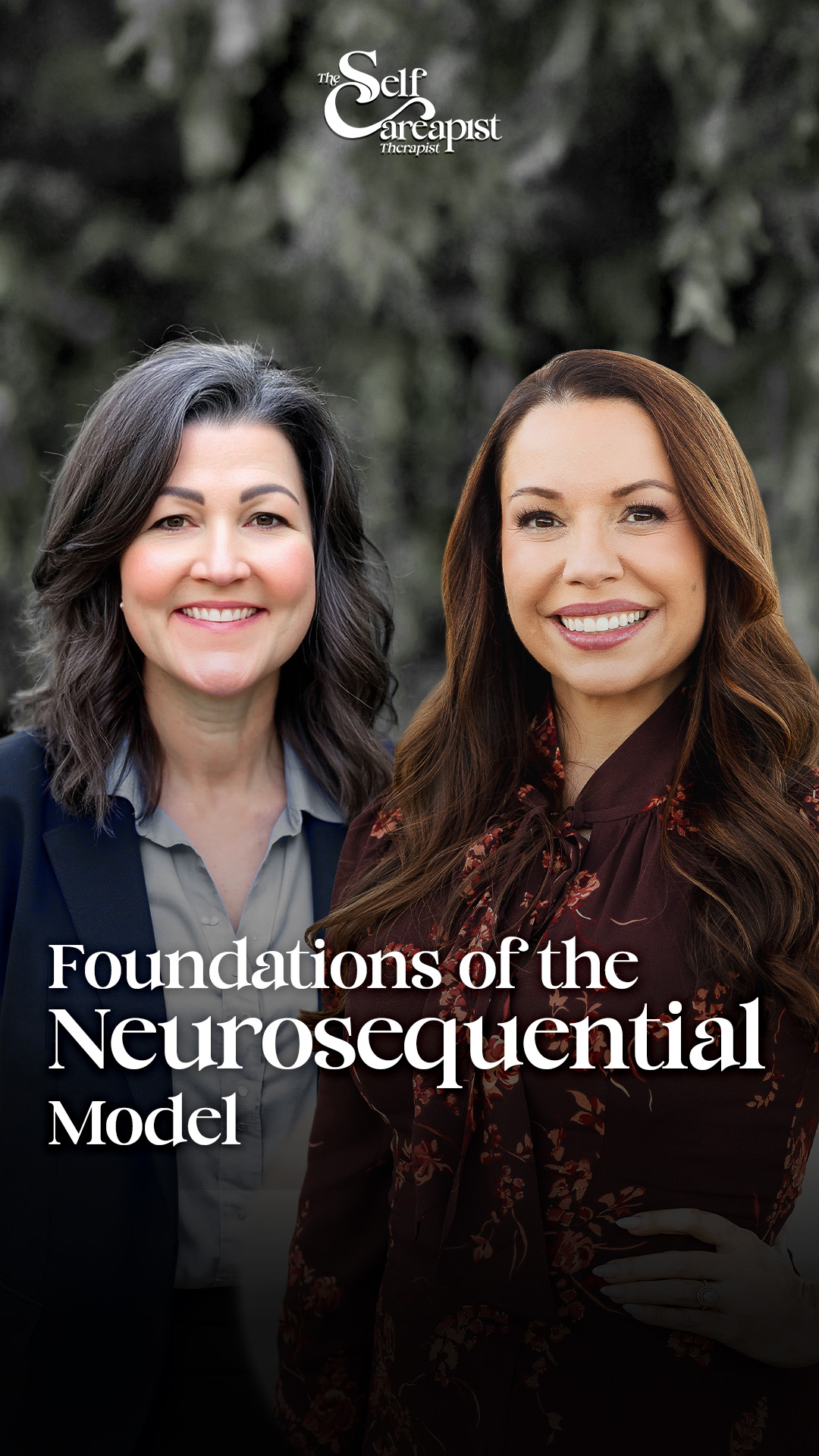
Michelle Maikoetter, LPC, one of Dr. Perry’s first Child Trauma Academy mentors and now a certified NSM trainer, explains that this model emerged from a fundamental understanding: what happens to us in our earliest years has a profound and lasting impact on brain development and functioning throughout our lifetime. She stopped by The Self Careapist Therapist to discuss this important work.
Why Traditional Trauma Treatment Approaches Sometimes Fall Short
Many trauma therapists in Arizona and Texas have encountered clients who don’t respond well to standard interventions. This isn’t because these therapies don’t work—it’s often because the individual isn’t yet developmentally ready for cognitive-based approaches.
The Critical Insight: While Trauma-Focused Cognitive Behavioral Therapy (TF-CBT) is considered gold-standard treatment for trauma, it requires certain neurological capabilities to be effective. For individuals whose early trauma disrupted fundamental brain development, attempting cognitive therapy before addressing foundational regulatory systems can be ineffective or even re-traumatizing.
The Three Rs: A Framework for Healing from Emotional Trauma
At the heart of the Neuro-Sequential Model for trauma therapy is the concept of the “Three Rs”: Regulate, Relate, Reason. This framework reflects how our brains actually process information—from the bottom up.
1. Regulate: The Foundation of Trauma Recovery
Regulation refers to our ability to manage our physiological and emotional states. For individuals who experienced early trauma, including bullying trauma or childhood neglect, these foundational regulatory systems may not have developed properly.
Maikoetter emphasizes that we must be regulated ourselves before we can help regulate someone else. This applies to therapists, parents, teachers, and anyone in a caregiving role. When we’re dysregulated (stressed, overwhelmed, or triggered) we cannot access our higher cognitive functions effectively.
2. Relate: The Power of Connection in PTSD Therapy
Once regulation is established, we can access our relational capacity. Human beings are fundamentally social creatures, and healthy relationships are essential for healing from trauma. However, for those whose trauma occurred within relationships as is common with developmental trauma, building trust and connection requires patience and consistency.
The model recognizes that relationships are not inherently regulating for everyone. For individuals hurt by caregivers, relationships may initially trigger fear rather than safety. This is where rhythm, routine, and structure become crucial, providing predictability before relational safety can be fully established.
3. Reason: Accessing Cognitive Therapy When Ready
Only when someone is regulated and relationally connected can they effectively access their cortex (the thinking, reasoning part of the brain). This is when cognitive therapies like TF-CBT, EMDR, or other talk therapies become most effective for treating PTSD and processing traumatic memories.
Best Practices for Trauma Treatment: The Sequential Approach
What sets the Neuro-Sequential Model apart as a best practice for trauma treatment is its emphasis on sequencing interventions based on individual developmental history rather than applying one-size-fits-all approaches.
Comprehensive Assessment
NSM-informed trauma therapists in Scottsdale and throughout Arizona and Texas begin with an in-depth developmental history from conception to present. This assessment examines not only adversity but also relational health—because we know that strong relational supports can buffer significant stress.
Bottom-Up Treatment Planning
Rather than starting with the most advanced evidence-based therapy, NSM practitioners may begin with:
Sensory-based interventions for clients who lack foundational regulation due to inadequate early sensory experiences (being held, rocked, soothed).
Rhythm and movement activities that help regulate the nervous system through music, drumming, or rhythmic physical activities.
Relationship-building experiences that establish safety and trust before processing traumatic content.
Cognitive processing therapies once the foundational systems are integrated and regulated.
Addressing Specific Trauma Types
Therapy for Bullying Trauma
Bullying trauma often occurs during critical developmental periods and can significantly impact a child’s sense of safety, belonging, and self-worth. NSM-informed therapy for bullying trauma recognizes that the social brain (our capacity for relationship and belonging) may have been wounded. Treatment focuses on rebuilding safety in relationships while addressing the shame and isolation that often accompany bullying experiences.
PTSD Therapy with a Developmental Lens
Traditional PTSD therapy often assumes a single-incident trauma in someone with otherwise healthy development. However, many individuals seeking trauma treatment in Arizona and Texas have experienced complex, developmental trauma. The NSM approach distinguishes between single-incident trauma (which may respond well to standard EMDR or TF-CBT) and complex trauma, which requires more foundational work before trauma processing can be effective.
Emotional Trauma Therapy
Emotional trauma (including neglect, emotional abuse, or growing up in chaotic environments) can be particularly challenging to treat because it affects the deepest levels of brain organization. These experiences shape our stress response systems, our capacity for emotional regulation, and our relational templates. NSM provides a roadmap for addressing these foundational disruptions systematically.
The Role of Rhythm in Trauma Recovery
One often-overlooked aspect of trauma treatment is the power of rhythm. From our first experiences in utero with our biological mother’s heartbeat to the daily rhythms of sleep and waking, rhythm is woven into the fabric of healthy brain development.
For trauma survivors whose early environments lacked predictable rhythm and routine, incorporating rhythmic activities such as music, drumming, rocking, or even structured daily schedules, can be profoundly regulating. Maikoetter notes that for some of the most challenging clients she’s worked with, rhythm and music were among the few things that could actually provide regulation when relationships couldn’t yet serve that function.
Why COVID-19 Increased Our Need for Trauma-Informed Care
The pandemic highlighted something crucial about human neurobiology: we are wired for connection. When our relational supports were suddenly unavailable, many people experienced dysregulation, disconnection, and decline in mental health even without direct trauma exposure.
This collective experience has created greater understanding of why relational health is so central to wellbeing and why trauma treatment must address not just individual symptoms but the broader web of relational supports. As Maikoetter reflects, COVID taught us to be more intentional about maintaining connections with people who matter to us and to recognize that needing others isn’t weakness; it’s biology.
Creating Healing Environments: Beyond the Therapy Office
The Neuro-Sequential Model isn’t just for individual therapy—it transforms entire systems. Maikoetter’s work at Cal Farley’s Boys Ranch in Texas demonstrated how organizations can shift from punitive, behavior-modification approaches to relationally-based, trauma-informed cultures.
Key principles for healing environments include:
Regulated leadership that models calm, curious, and connected responses rather than reactive, punitive ones.
Increased structure AND increased relational support during times of struggle, rather than withdrawal and isolation.
Understanding that behavior is communication about unmet needs or overwhelmed capacity, not intentional defiance.
Recognizing that people do their best when they can, and when they can’t, something is interfering with their capacity.
These principles apply in homes, schools, workplaces, and therapeutic settings throughout Scottsdale, Arizona, Texas, and beyond.
The Transformative Power of Empathy in Trauma Work
Empathy (the ability to imagine yourself in another person’s experience) is a high-level cognitive function that requires us to be in a regulated state. Maikoetter emphasizes that whenever we say “I would never do that,” we’re creating separation rather than understanding.
True trauma-informed care recognizes our shared humanity and acknowledges that under the right (or wrong) circumstances, any of us could find ourselves struggling. This compassionate stance is essential not only for effective trauma therapy but for creating the kind of relationships that allow healing to occur.
Ready to Explore Trauma Treatment Options?
If you’re seeking trauma therapy in Scottsdale, Arizona, or Texas, finding a therapist trained in developmental and relational approaches can make a significant difference in your healing journey. Look for practitioners who understand that effective trauma treatment is about more than symptom reductionit’s about creating the conditions for your nervous system to reorganize toward health and connection.
Getting Started with NSM-Informed Trauma Therapy
For those interested in learning more about the Neuro-Sequential Model, several resources are available:
Read “What Happened to You?” by Dr. Bruce Perry and Oprah Winfrey. Many trauma survivors report this book provided more insight and self-compassion than years of traditional therapy.
Explore free resources at neurosequential.com, including videos and a book study guide.
Seek NSM-trained therapists who can provide comprehensive developmental assessment and sequenced intervention planning.
Consider organizational training if you work in schools, residential care, or other systems serving traumatized populations.
Catch the full episode:
Considerations of Effective Trauma Treatment
The Neuro-Sequential Model offers a scientifically-grounded, developmentally-informed approach to trauma treatment that respects how our brains actually develop and heal. Whether you’re seeking therapy for PTSD, emotional trauma, bullying trauma, or complex developmental experiences, understanding these principles can guide you toward more effective interventions.
The journey from trauma to healing isn’t about fixing what’s broken. It’s about understanding what happened, recognizing how it shaped your development, and providing the experiences your brain needs to reorganize toward health. With the right support, sequenced appropriately for your unique history, profound healing is possible.
Remember: Healing from trauma is not linear, and there’s no shame in needing foundational work before you’re ready for more advanced processing. Every brain developed based on its unique experiences, and every healing journey will be equally unique. The key is finding practitioners who understand this and can meet you where you are while guiding you toward where you want to be.


+ show Comments
- Hide Comments
add a comment