

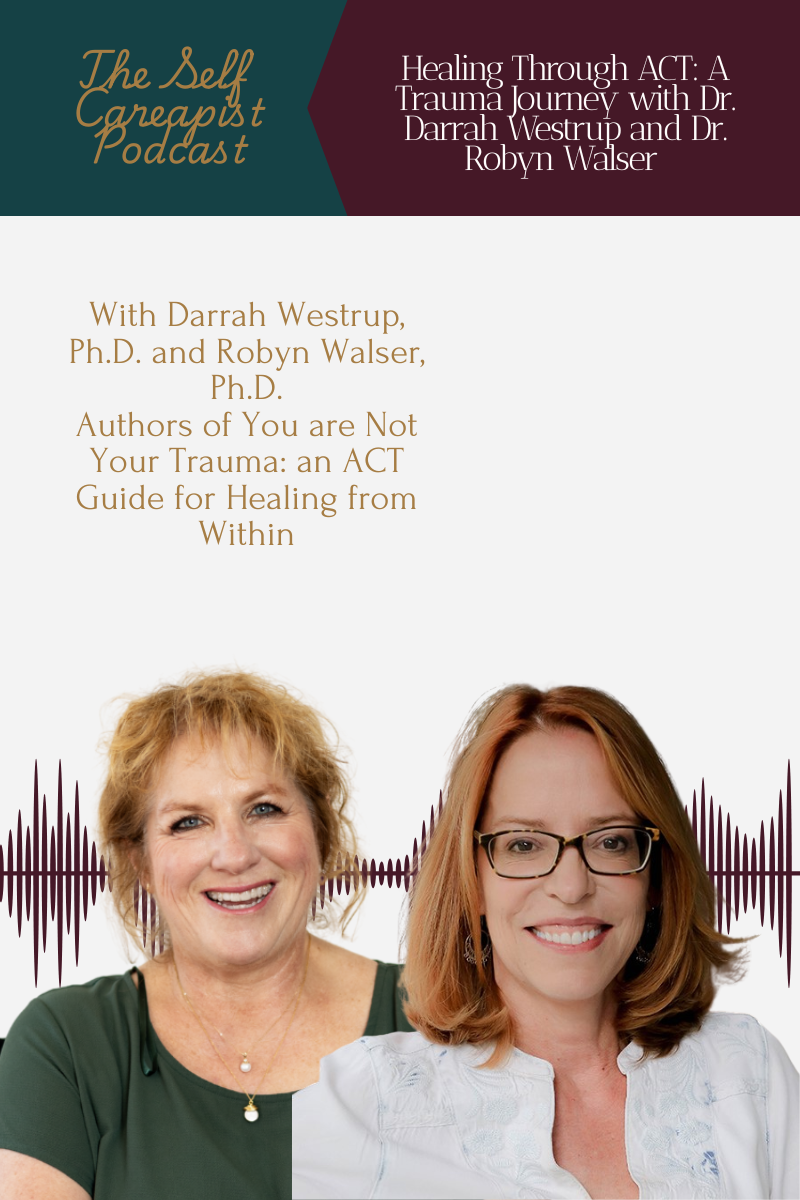
on The Self Careapist Podcast
Summary
In this episode of The Self Careapist Therapist Podcast, Lorain talks with Dr. Robyn Walser and Darrah Westrup about their new book, You Are Not Your Trauma, and how Acceptance and Commitment Therapy (ACT) helps people move beyond symptom reduction toward a values-driven life. We cover what ACT is, how avoidance keeps trauma pain stuck, why exposure is compassionate (not cruel), and how “self-as-context” lets you hold memories without being defined by them.
“You are more than your history. Pain belongs—but it doesn’t have to be in charge.”
What We Mean by “Trauma”
The guests distinguish everyday difficulty from trauma; events that threaten life or bodily integrity (e.g., ongoing childhood abuse, combat, severe violence, certain immigration experiences). That clarity matters because ACT tailors skills to the intensity and impact of traumatic stress while still being useful for any hard experience.
What Is ACT (Acceptance & Commitment Therapy)?
ACT helps people shift from control/avoidance to open, aware, and engaged living:
- Open (Acceptance & Defusion): Making room for thoughts, feelings, and memories without battling them.
- Aware (Present Moment & Self-as-Context): Contacting experience here-and-now and viewing yourself as the container—not the content—of trauma memories.
- Engaged (Values & Committed Action): Choosing behaviors guided by what matters, not by fear or symptoms.
Trauma & Avoidance: Why Struggle Keeps Pain Stuck
Avoidance feels logical; who wants flashbacks or fear? But the “bee analogy” captures the paradox: swatting can escalate a sting. With trauma, running from memories and sensations often rehearses them, shrinks life, and dampens joy. ACT teaches a new stance: let experiences rise and fall while you move toward meaning.
“You Are Not Your Trauma”: Self-as-Context
A powerful ACT process helps survivors see they are larger than their memories and sensations. You can notice trauma-related thoughts and feelings without becoming them. From that steadier vantage point, values-based steps (connection, creativity, service, spirituality, play) become possible again.
The ACT Path for Trauma (Flexible, Not Linear)
Walser and Westrup outline three flexible stages you can revisit as needed:
- Safety & Stabilization: Grounding, present-moment skills, values awareness.
- Exposure (Approach, Not Attack): Gradual, supported contact with memories and avoided cues to reclaim life territory.
- Resilience & Reconnection: Rebuilding vitality—relationships, work, creativity, play, community, faith.
Tip: If you experience dissociation or self-harm urges, pause exposure and seek professional support before proceeding.
From Symptom Relief to a Life Worth Living
Many therapies stop at “fewer symptoms.” ACT goes further: How do you want to live now? The guests emphasize values clarification (e.g., kindness, contribution, adventure, faith, learning) and committed action. You can honor care-for-self and generosity, adjusting moment to moment.
Stories That Inspire
- Letting History Be History: A veteran stuck for decades in the story of war learned he couldn’t undo the past—but could stop running and start living now.
- Permission for Play: A value-consistent “yes” to friendship and play replenished energy and re-opened joy—proof that self-care can be light and fun, not just “work.”
Skills You’ll Hear in the Episode
- Defusion practices: Seeing thoughts as thoughts (“I’m having the thought…”)
- Willingness/acceptance: Making space for sensations and emotions without fighting
- Grounding & present-moment attention
- Values discovery: Noticing what your pain points to (we hurt where we care)
- Committed action plans: Tiny steps that enact meaning now
Who This Episode Helps
- People living with PTSD/trauma (acute, chronic, complex)
- Survivors who feel numb, avoidant, or stuck in loops
- Clinicians seeking practical ACT language and exercises
- Partners and families supporting a survivor
- Listeners curious about exposure done safely and compassionately
For Clinicians
The book reads like in-room guidance you can use immediately with clients. Map control/avoidance, teach self-as-context, pace exposure with consent and care, and always re-anchor in values. If you’d like support integrating ACT for trauma into your practice, I offer professional clinical consultation.


+ show Comments
- Hide Comments
add a comment