

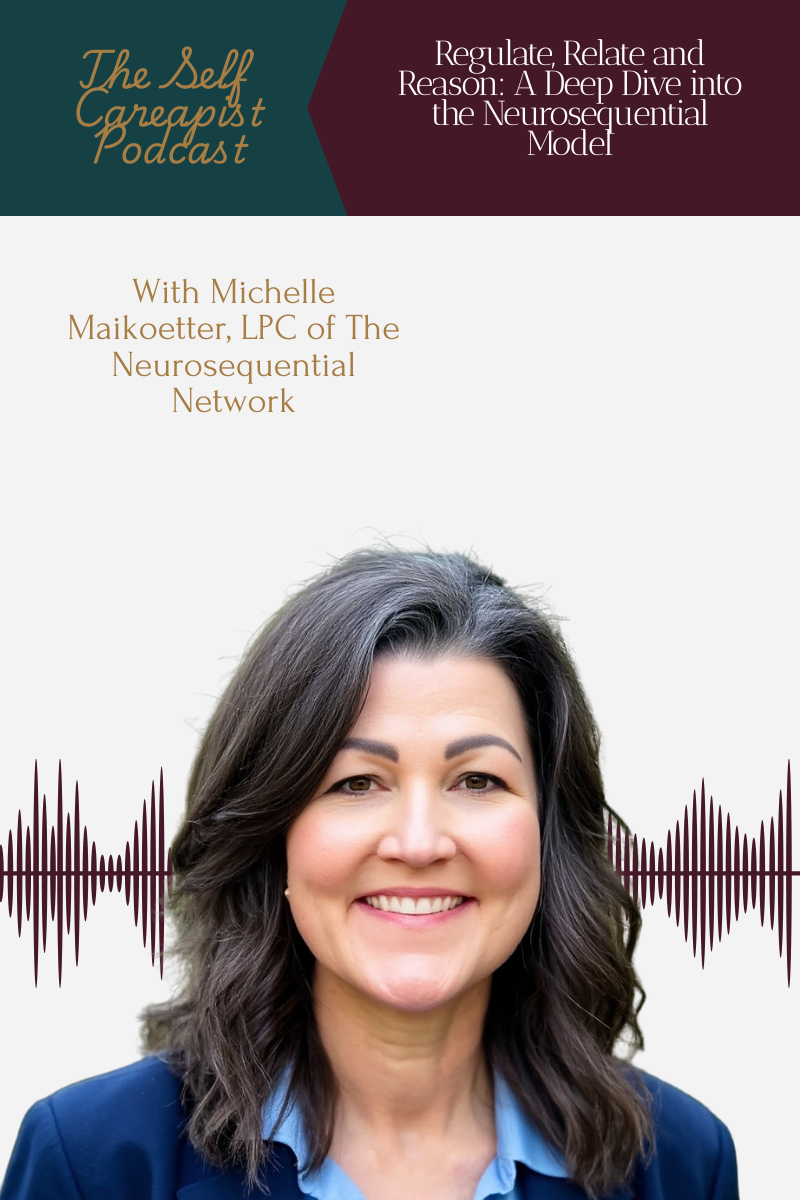
As trauma therapists, and mental health providers, we are constantly trying to understand why certain clients respond well to treatment while others struggle to access cognitive skills, emotional awareness, or the ability to stay present. In this episode of The Self Careapist Therapist Podcast, I talked with Michelle Maikoetter, LPC, Director of Special Projects for The Neurosequential Network, about one of the most influential trauma informed frameworks available today: the Neurosequential Model created by Dr. Bruce Perry.
Whether you provide EMDR therapy, trauma therapy, or work with children, families, or adults, this model offers a powerful lens for understanding the nervous system, developmental trauma, and treatment readiness.
What Makes the Neurosequential Model a Trauma Informed Game Changer
The Neurosequential Model integrates neurodevelopmental research, trauma science, attachment theory, stress response patterns, and relational health. Instead of using a simple top down approach, it examines the developmental sequence of the brain and how traumatic experiences shape that sequence long before cognitive memory exists.
Michelle explained that early trauma has a lifelong impact. Experiences from in utero to age three strongly influence regulation, attachment, arousal systems, impulse control, executive functioning, and the ability to tolerate EMDR reprocessing. This is why trauma therapists often encounter blocks during treatment. The nervous system is responding to developmental trauma rather than the current situation.
Why Trauma Therapists Need a Sequential Lens
Traditional assessments focus on symptoms, but the Neurosequential Model focuses on developmental impact and the client’s current neurobiological state.
Michelle explained that Neurosequential informed assessment includes:
-Developmental trauma history
-Relational health and the presence of attuned caregivers
-Treatment sequencing based on the client’s nervous system, not their chronological age
A client might want to engage in EMDR, but their nervous system may not yet be ready for reprocessing. They may need regulation and co regulation skills before trauma processing can be effective.
Trauma Work Requires Bottom Up Before Top Down
The Neurosequential Model aligns well with the preparation and resourcing phases of EMDR. Michelle described the brain’s sequence:
Regulate
Relate
Reason
This mirrors the EMDR readiness model: preparation, resourcing, processing, and integration. Michelle said that under stress the brain shuts down from the top to the bottom. The cortex loses accessibility first. We behave first, then feel, then think. This is why cognitive strategies fail when someone is overwhelmed and why clinicians must focus on bottom up stabilization before expecting insight or logical reasoning.
Regulation as Core Trauma Treatment
Regulation is not only a crisis strategy. It is a proactive and daily practice. According to Dr. Perry’s research, regulation can occur in two minutes. Consistent micro practices are more impactful than occasional large interventions.
Regulation strategies include sleep, daily rhythm, predictable transitions, movement, music, patterned sensory input, relational connection, attuned conversation, nutrition, blood sugar stability, and creativity. These strategies support EMDR therapy in Scottsdale and trauma therapy in Arizona by helping clients stabilize arousal and stay within their window of tolerance.
When regulation is present, the cortex becomes available for trauma processing.
Rhythm as a Foundational Regulator
Rhythm is one of the most powerful tools in trauma recovery. Michelle explained that rhythm regulates the stress response system, supports co regulation, and builds relational safety. Music, rocking, patterned movement, daily routines, and predictable structure all create internal stability. Rhythm also aligns with EMDR’s bilateral stimulation principles.
The Cortex and Trauma: Why Trauma Processing Can Feel Difficult
We discussed the role of the cortex clearly. The cortex handles language, time, cause and effect, and insight. Under stress, the cortex goes offline. This is why clients cannot reason or reflect when triggered. It also explains dissociation and emotional shutdown during EMDR or trauma processing.
Trauma is not a cognitive issue. It is a regulation and neurodevelopmental issue.
Empathy, Shame, and Shared Humanity
Empathy requires a regulated nervous system. It is a cortical function and cannot be accessed during dysregulation. Trauma survivors may appear to lack empathy because they are overwhelmed or shut down. Understanding this decreases shame and increases self compassion.
Clinicians must also be regulated in order to offer attunement and guidance.
How the Neurosequential Model Supports EMDR and Trauma Clinicians
This model strengthens trauma treatment by helping clinicians:
Identify readiness for EMDR and other trauma processing
Build stronger Phase Two resourcing
Integrate somatic and sensory tools
Enhance relational safety
Sequence interventions based on neurodevelopment
Understand dissociation in context
Reduce overwhelm during sessions
Adjust expectations based on brain organization rather than symptoms
This is especially useful for developmental trauma, complex PTSD, dissociation, early neglect, attachment trauma, and clients who shut down during trauma work.
Professional Training Options
The Neurosequential Network offers several pathways for clinicians, caregivers, and educators. These include:
NMT for mental health clinicians
NMC for caregivers
NMRS for supervisors
NME for schools
Free videos and book studies including What Happened to You
More details are available at Neurosequential dot com.
Final Reflection: Trauma Healing Requires Respect for Biology
This conversation with Michelle Maikoetter, LPC, is a reminder that trauma therapy is not only about insight. It is about understanding the nervous system and honoring the developmental sequence that shapes behavior. The Neurosequential Model offers a roadmap for trauma therapists, EMDR clinicians, and anyone providing trauma informed care. Healing work must follow the sequence of regulate, relate, and reason before deeper processing can occur.


+ show Comments
- Hide Comments
add a comment