

Therapy for therapists in Texas tends to get treated as optional once licensure arrives. We pour years of energy into supervision during grad school, practicum, and our pre-licensure hours. Then a piece of paper arrives that says we’re independently licensed, and the supervision just stops.
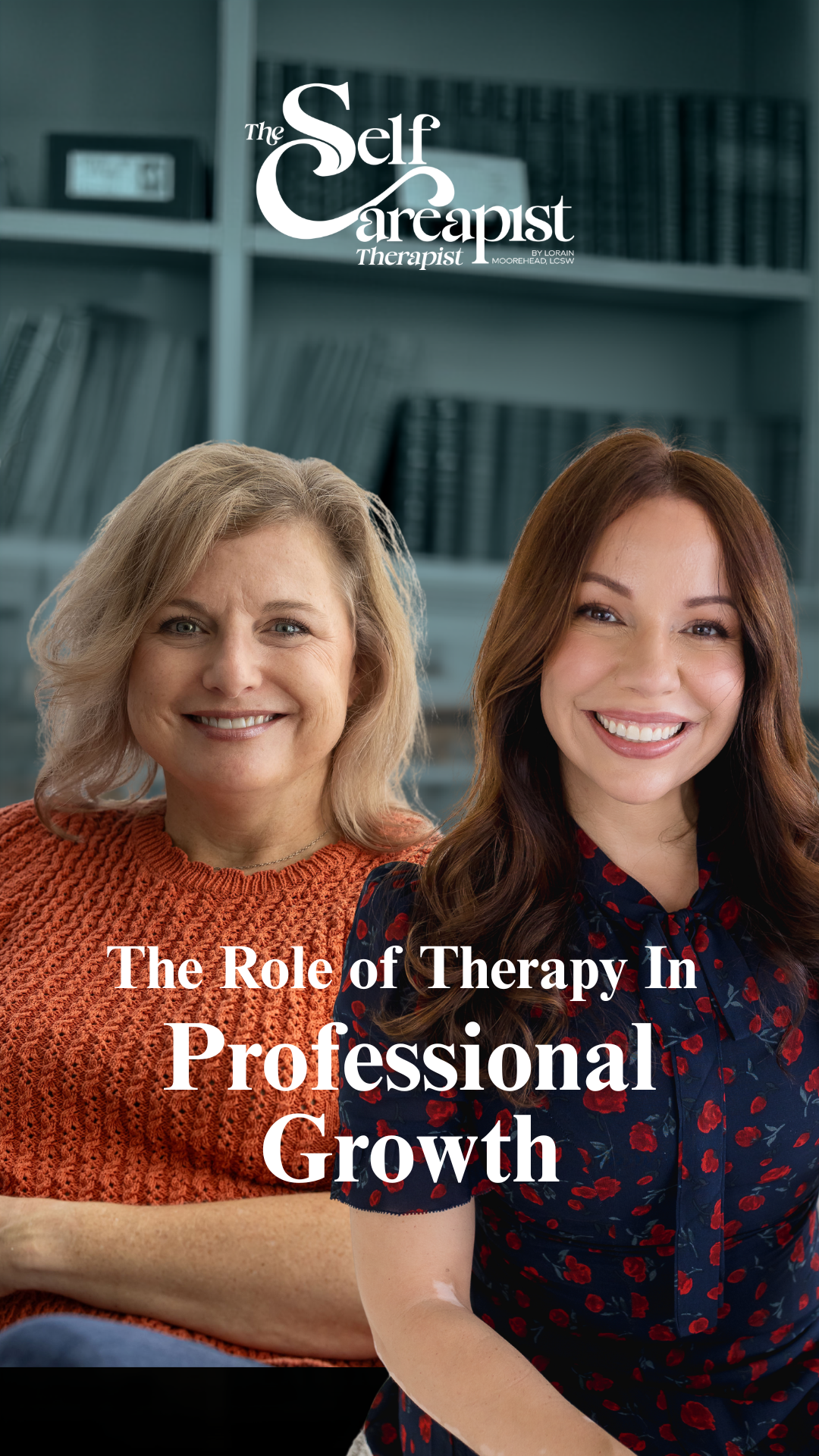
That was the hot take that opened my conversation with Dr. Laurie Bruce, PhD, a clinical psychologist of over 25 years and host of the podcast From Both Sides of the Couch. This episode was a podcast swap, two hosts trading questions, and we landed fast on a shared conviction: the race to licensure is a race to an arbitrary finish line.
In some parts of Australia and Europe, ongoing consultation is required to maintain licensure. In the US, most states require continuing education hours but zero clinical supervision after you’re licensed. Texas is no exception. Dr. Bruce put it plainly: she’d trade half her required CEU hours for supervision or consultation hours. Fifteen hours spent in real consultation would be worth more to her clinical growth than another survey course.
Learning a New Modality Sends You Back to the Beginning
Every time you pick up a new specialty, you become a beginner again. That’s a feature, not a flaw, and it’s where consultation earns its keep.
For me, that lesson came through EMDR. The training bakes consultation in from the start: 10 hours during basic training, 20 more toward certification, 20 more to become a consultant. I had my own sessions reviewed with a consultant, with client permission, and reviewed sessions of the clinicians I consult with. That process surfaced habits in my practice I hadn’t caught, including some that predated EMDR entirely.
Dr. Bruce’s foundation is DBT, where a consultation team is built into the model itself. She’s met monthly with the same peer consultation group of psychologists for over 20 years. Her current certification path, Developmental and Relational Trauma Therapy (DART), asks clinicians to map their own trauma stories through a 16-page assessment before applying the model with clients. Like IFS and EMDR, you learn the treatment partly by turning it on yourself.
Supervision vs. Consultation vs. Therapy: Where Are the Lines?
This is the question clinicians ask most, and the honest answer is that the lines blur. What matters is naming which role you’re in.
Dr. Bruce describes it as a dance. In a supervision session she might say, “I’m putting on my teacher hat for a moment” before walking through a DBT skill. If her supervisee’s anxiety shows up, she’ll name the shift again: “For a moment I’m going to put on my therapist hat and ask what’s coming up for you.” Naming the role works like informed consent in miniature. It also happens to be a mindfulness-based regulation strategy: naming what’s occurring helps the nervous system settle.
One distinction did hold firm for both of us: your administrative supervisor is not your clinical supervisor. You can’t bring “this client triggered a childhood memory for me” to the person who signs your paycheck. You can bring it to your therapist.
Therapy for Therapists in Texas Is Professional Development, Not a Luxury
Dr. Bruce is direct about this: our own psychotherapy is the biggest gift we can give ourselves, and it functions as clinical development, not a luxury. Therapy for therapists in Texas works the same way. A therapist who sees therapists can hold the countertransference, the activation, and the personal material that no workplace supervisor should touch.
So what gets in the way? We named a few barriers together: cost, time, the conditioning that says we’re supposed to be the expert now, and the small-community problem. If you attend the trainings, the consultations, and the networking events in your city, the pool of therapists you don’t already know shrinks fast.
Her advice for finding your person: ask your local therapist community who the therapist is who sees therapists. Treat it as its own specialization, because it is.
Finding Therapy for Therapists in Texas: Telehealth Widens the Pool
The small-community problem hits hard in Texas. In cities like Amarillo, Waco, or Tyler, the clinicians you’d consider seeing as a therapist are often the same clinicians you sit next to at trainings and networking events. Even in Houston, Dallas, or Austin, specialty overlap narrows the field faster than you’d expect.
Telehealth changes that math. As Dr. Bruce and I discussed, licensure compacts and comfort with virtual care mean a Texas therapist can now work with a therapist for therapists who practices anywhere in the state, without the dual-relationship tangles of a shared local community. Distance becomes a benefit instead of a barrier, which is part of why therapy for therapists in Texas is easier to find now than it was even five years ago.
I’m licensed in Texas and work with Texas clinicians through telehealth, both as a therapist who sees therapists and through clinical supervision and EMDR consultation. The geographic separation from your day-to-day professional circle is often exactly what makes the deeper work possible.
What Strong Supervision Looks Like in Practice
We compared structures, and our approaches differ in ways I found useful.
I lean on systems. Informed consent, a goal-setting form that reads like a treatment plan, and something borrowed from social work education called a learning agreement: a contract that names target areas, what the supervisee wants more of, and several concrete paths to get there (a book, a podcast episode, a skill to try with clients). It gives supervisees a way to keep growing between sessions instead of waiting to sit across from me.
Dr. Bruce manages expectations up front and holds one non-negotiable priority for new therapists: the intake. Her view flips the common framing. The intake isn’t something to get out of the way so the work can start. The work starts at first contact, before the client is officially a client. How fast you respond to that first email, how warm your tone is, whether you use an exclamation point: clients are evaluating and projecting from the very beginning. She could spend half a supervision year on intake skills alone, and I’d co-sign that. Rapport building, diagnostics, and curious questioning all live inside a strong intake.
The Takeaway
Supervision, consultation, and therapy aren’t three boxes to check at different career stages. They’re three overlapping supports, and the strongest clinicians I know keep all three within reach long after licensure. If your growth stalled the day your license arrived, pick one of the three and re-enter.
Dr. Laurie Bruce is launching a virtual community for therapists, physicians, and other caregiving professionals focused on sustaining passion for the work. You can follow that launch through her podcast, From Both Sides of the Couch, on YouTube and her website.
Listen to the full conversation on Self Careapist Therapist podcast. If you’re looking for therapy for therapists in Texas, clinical consultation, or EMDR consultation, visit LorainMoorehead.com to see supervision and therapy services.


+ show Comments
- Hide Comments
add a comment