

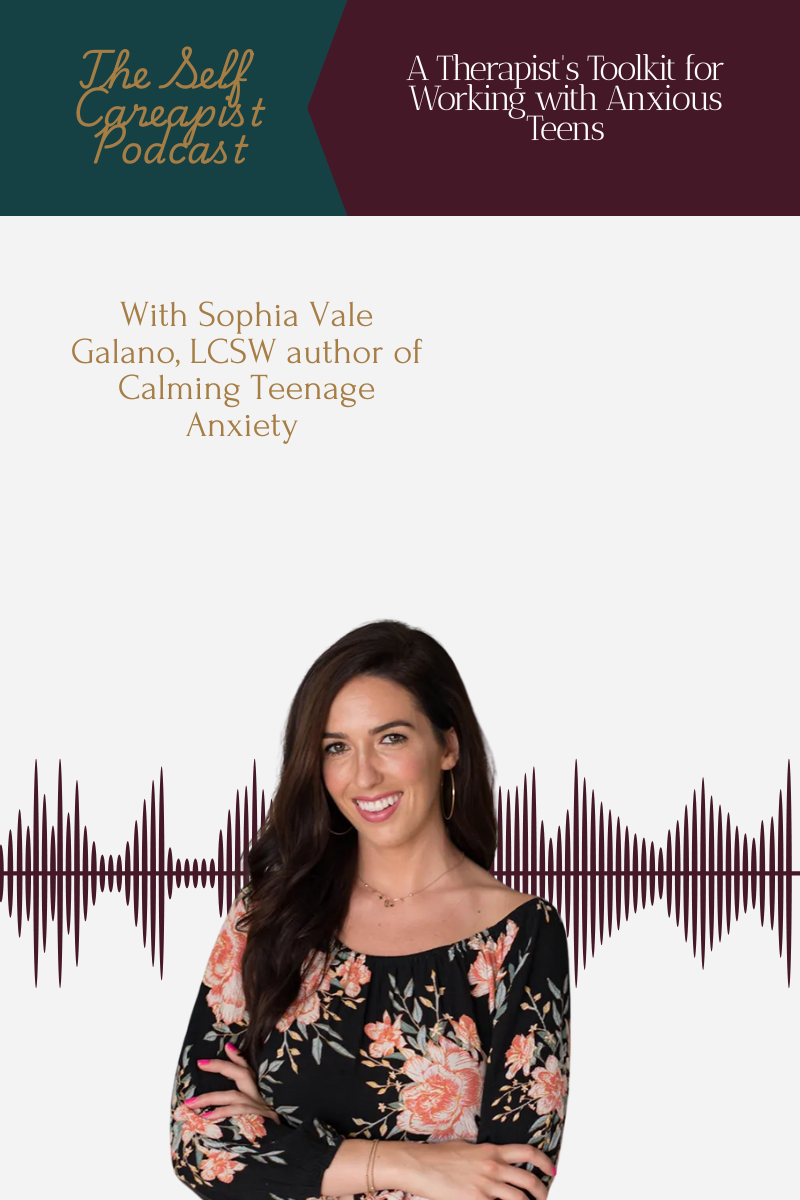
Understanding Teen Anxiety in a Changing World
Teen anxiety has become one of the most common mental health concerns facing families today. Between academic pressure, social media comparison, post-pandemic developmental delays, and a culture that rewards constant performance, many teens are living in a near-constant state of overwhelm.
In this episode of The Self Careapist Podcast, Lorain Moorehead, LCSW, talks with Sophia Vale Galano, LCSW, author of Calming Teenage Anxiety: A Parent’s Guide to Helping Your Teenager Cope with Worry. They explore how parents can move from fixing and controlling to coaching and collaborating, building connection instead of conflict, and teaching teens lifelong emotional skills along the way.
Anxiety vs. Typical Teen Stress: How to Tell the Difference
Parents often ask, “Is my teen just moody or truly anxious?” Sophia explains that frequency and interference are key.
Typical stress looks like nervousness before an exam, but life continues afterward. Anxiety looks like panic, nausea, or school refusal before exams; rumination long after; and withdrawal from friends and activities.
When anxiety begins limiting life, it’s time for closer attention and possibly professional anxiety treatment.
“We expect teens to act like adults, but their brains aren’t finished developing. Empathy and curiosity go a lot farther than lectures.”
The Power of Curiosity Over Control
Well-intentioned parents often rush to solve the problem by saying things like “Go for a walk,” “Just breathe,” or “You’ll be fine.” While those solutions can help, timing and tone matter. Teens first need validation, not quick fixes.
Try saying:
- “What’s the hardest part right now?”
- “What does that feel like in your body?”
- “Would you like ideas or just a listening ear?”
These small language shifts transform a power struggle into a partnership.Social Media and Anxiety: A Harm Reduction Approach
Instead of banning social media outright, which often backfires, Sophia encourages guided reflection.
Ask, “How do you feel after 15 minutes on that app? After 2 hours?”
Explore features like mute, restrict, or unfollow that protect emotional space.
Add positive or interest-based accounts to balance the feed.
When parents engage with teens on technology use, they teach discernment and digital literacy—skills that last long after the rules change.
The Coaching Mindset: Preparing for Independence
Adolescence is a gray zone—no longer a child, not yet an adult. Parenting that once required structure and direction now benefits from collaboration and guided choice.
Sophia invites parents to imagine themselves as coaches: offering feedback, modeling regulation, and cheering effort instead of enforcing perfection. This approach strengthens confidence and prepares teens to self-regulate when they eventually leave home.
How the Pandemic Changed Development
Sophia notes that many teens lost key developmental milestones during lockdown. The result is that some sixteen-year-olds now function more like fourteen-year-olds in emotional maturity and social readiness.
Understanding that delay helps clinicians and parents adjust expectations and pace independence with compassion rather than frustration.
When to Seek Professional Anxiety Treatment
If anxiety interferes with school, relationships, or physical health, it may be time for professional help.
Evidence-based options include:
- CBT (Cognitive Behavioral Therapy) for identifying and reframing anxious thoughts
- ACT (Acceptance and Commitment Therapy) for developing flexibility and values-guided action
- EMDR therapy when anxiety is rooted in trauma or stored memories
- Parent coaching to align home responses and reduce family tension
In Arizona, Lorain offers anxiety therapy for teens, EMDR therapy in Scottsdale, and professional clinical consultation for therapists seeking supervision support.
For Clinicians
Sophia’s framework gives therapists practical language for working with both parents and teens:
- Normalize parental worry and redirect it toward curiosity
- Teach tracking of anxiety patterns without judgment
- Encourage parents to model self-care instead of preaching it
- Integrate family sessions where empathy runs both ways
- Grab an anxiety worksheet.
Key Takeaways
- Curiosity fosters connection; control fuels resistance
- Mindful tracking helps distinguish stress from anxiety
- Social media reflection teaches emotional awareness
- Coaching builds resilience and independence
- Parents need self-care too; the calm nervous system leads the room


+ show Comments
- Hide Comments
add a comment