

If you work with high achievers, you have probably sat across from someone met their goal and didn’t feel any better because of it. The promotion came through. The project was a success. And none of it touched the part that needed touching. Cue Dr. Hewitt, and what he wants us to understand about perfectionism.
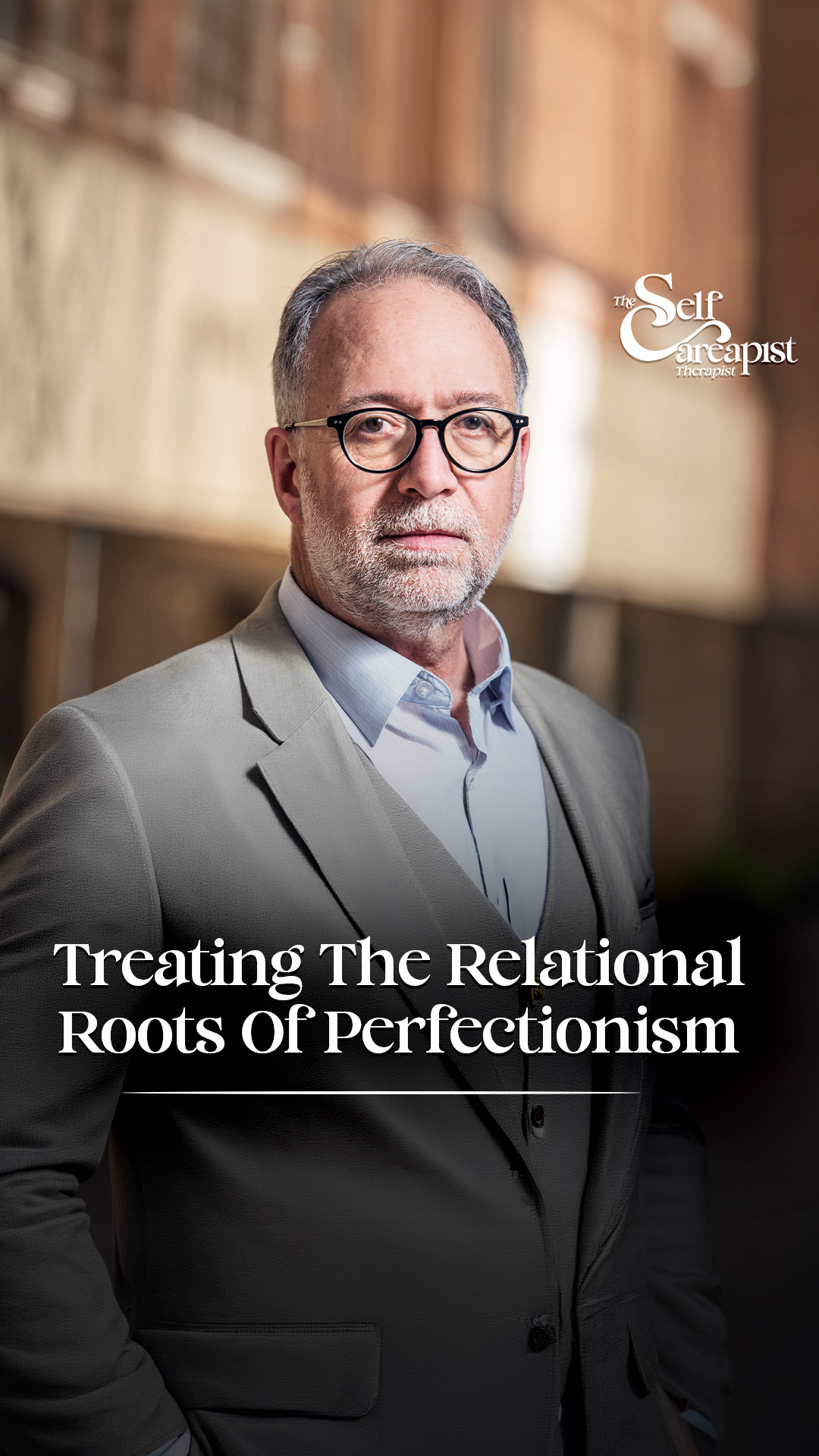
That is the clinical territory Paul Hewitt, Ph.D. has been researching and treating for decades. He is a full professor at the University of British Columbia, has published over 300 research papers on perfectionism, and runs a practice working with high achievers from entrepreneurs to Olympians.
Recently, I had the opportunity to interview Dr. Hewitt on Self Careapist Therapist Podcast, where we discussed what therapists often misunderstand about perfectionism and what actually shifts it in treatment. One framework from our conversation has stayed with me: perfectionism is the wrong tool for the job.
Perfectionism Is Not About High Standards
One of the first things Dr. Hewitt emphasized during our podcast conversation is that perfectionism is not synonymous with conscientiousness or striving for excellence. That distinction is clinically important, especially when working with high achievers who have been praised for the very pattern that is quietly causing harm.
In his model, perfectionism is a complex personality style rooted in the need to be perfect or appear perfect in order to feel acceptable, loved, and worthy. It develops early, runs deep, and operates more like a core relational strategy than a set of cognitive distortions.
A highly conscientious client can complete something well and access genuine satisfaction. A perfectionistic client completes the same task and typically finds a reason it was not enough, or that they are not enough. The performance never quite lands.
The Wrong Tool Analogy
During the episode, Dr. Hewitt described two core needs at the heart of perfectionism:
• the need to be loved and accepted by others
• the need to feel internally worthy
Somewhere early in development, the client formed a belief that being perfect was the path to getting those needs met. Not as a conscious strategy, but as a learned way of moving through a world that felt unsafe or unpredictable.
The problem is that achievement cannot deliver what those needs actually require. You cannot perform your way to feeling fundamentally lovable. Perfectionism is simply not the right tool for what it is trying to fix.
He shared a case he has written about publicly: a university student returning to outpatient work after a serious suicide attempt. The student set out to get the highest grade in his most difficult course. He did. He came to the next session more depressed than before.
“Because I had to work so hard to get it,” the student said, “it just proves I am not smart. I am not capable. I am still not good enough.”
The achievement did not touch the need. It could not. That is the wrong tool problem in action.
Dr. Hewitt also described a client who kept a cardboard box in his office where he would throw plaques and awards, almost like a wastebasket. Meaningless to him. No amount of external recognition was reaching the internal wound it was meant to address.
For therapists, this framing offers something useful in session. It removes the moral weight from the pattern. The drive made complete sense given what it was originally trying to solve. The work is not about shaming the strategy but about helping clients find tools that can actually reach the need.
Why Clients Cannot Just Stop
Another powerful moment in our conversation was Dr. Hewitt’s point that perfectionism is less about trying to be perfect and much more about trying to ensure not being seen as imperfect.
The avoidance of inadequacy is often the more powerful driver than the pursuit of excellence.
He describes it this way: asking a perfectionistic client to stop performing and be seen without their armor registers at a physiological level as genuinely unsafe. Like asking someone to close their eyes and walk across a busy street. They will not do it, and their resistance is appropriate given what that behavior has been protecting.
This is why psychoeducation alone does not move the needle. The behavior has been providing a sense of safety since childhood. The therapeutic relationship becomes the place where that safety gets rebuilt on different terms.
The Attachment and Developmental Foundation
In our interview, Dr. Hewitt grounded his model in attachment theory and self-psychology, which makes it especially relevant for therapists working at the intersection of perfectionism and complex trauma.
When early attunement is inconsistent, two things develop in tandem. The child forms a working model of others as unable or unwilling to meet their needs, even while those others remain the source of what they need most. And they develop a fragile, deficient sense of self — a felt conviction that something is fundamentally wrong with them.
From there, performing becomes reinforcing. Do something impressive, get a moment of warmth or relief. The behavior gets locked in, even as it keeps missing the actual target.
If you are working with clients who present with significant external success alongside persistent feelings of defectiveness, relational difficulty, or an inability to internalize positive feedback, this developmental framework offers a powerful clinical lens.
Listen to the Full Conversation on The Self Careapist Podcast
This post captures a core framework, but the full episode goes considerably deeper.
In our conversation on The Self Careapist Podcast, Dr. Hewitt and I also discuss:
- Clients who cannot get started despite high capability
- Parallels between perfectionism treatment and ERP for OCD
- His concerns about symptom-based diagnostic frameworks
- What he actually does in the room with perfectionistic clients
If you work with high achievers, perfectionists, or clients navigating complex trauma, this episode is worth adding to your clinical listening.


+ show Comments
- Hide Comments
add a comment